Suburban Rail Loop

You’ve missed the point of why they’re building the SRL. It isn’t just a transport project, it’s about reshaping the urban form altogether. The aim is to create multiple business districts in the middle suburbs, based off of nearby infrastructure like universities, hospitals and the airport. If that’s successful, then in future the CBD won’t be where the majority of people using trains work, there will be no majority destination because the jobs will be better distributed and people will be going in all directions.

There’s little point in building it with a low capacity mode, because if they realise their aim, they will get the problem Brisbane has run into with busways - the infrastructure gets overcrowded, and it becomes harder to increase available capacity. In addition, there is no surface corridor available for a line like that. Whatever the mode, it has to be tunnelled at great cost. And if a great cost is being incurred anyway, why bother with BRT? The marginal benefit of a large increase in passenger capacity is greater than the marginal cost of building a slightly bigger tunnel and installing rails and overhead wires.

Think Tokyo where the centre of the city is certainly a big magnet for employment, but there are multiple business districts outside of it with incredibly busy train station precincts like Shinjuku, Shinagawa and Ueno. Did they link them up with a low capacity mode of public transport? No, they built the Yamanote line for that, and it’s not just one of the busiest lines in the city, it’s basically the backbone of their network. Those stations I mentioned are also hubs for regional trains, which on a smaller scale is also the plan for Clayton, Sunshine and Broadmeadows. This will declutter Flinders Street and Southern Cross a little.

Are there legitimate criticisms of the project? Sure. It was prioritised over more urgent short-term needs like the Melton and Wyndham Vale electrifications, likely for political reasons since the eastern suburbs have more marginal state electorates than the western suburbs do. And they might be building the platforms too short, and they might need more stations, and it sucks up a lot of funding. However, the project is still a good one. It shows a level of vision and forward planning that has never really existed before in Australia. And I doubt Queensland would ever show that much interest in urban development or public transport investment.
7 Likes

Project merits to one side for a moment, the Victorian Government can do this already at around ~300 existing train stations in Melbourne. Plus they have trams on top of that.

A lack of rail isn’t the limiting factor here, and on lines that have lower frequency, this could be cheaply boosted to support TOD.

No, they can’t. Creating a new business district, with its own economic orbit separate to the CBD, is not just a matter of building a few TODs around a station. If that was the case, Box Hill would already be one. The reason it isn’t (yet) is that there isn’t a huge demand for commercial space there, because it’s not well connected by high capacity transport to the rest of Melbourne, except through a radial train line from the CBD. This makes it hard for workers to get in and out if they don’t live locally, unless taking the same line that would get them to the CBD, a much bigger economic centre. And rarely does any serious business district in Australia have almost all their workers living locally.

Now obviously everywhere is connected to everywhere else by roads. People could simply drive to a new business centre. Except, at the scale needed to really be what the Victorian government envisions, an economic centre big enough to compete with Melbourne CBD for the concentration of commercial jobs, there simply isn’t enough road space or parking to handle that many workers driving. Nor do buses and trams have a high enough capacity, and without grade separation they will never be rapid enough to change the game for commuters to a suburban business district. If buses and trams and TODs were sufficient, Melbourne would already have multiple significant business districts rivalling the CBD by now, but they don’t.

Let’s look at Sydney. My view is Parramatta is the sort of place that Victoria aspires to for their SRL station locations, because it’s big enough to compete with Sydney CBD for the concentration of commercial jobs. Note Parramatta has both a radial and an orbital railway line running through it, which provides the capacity to feed more workers into their business centre from all directions. And it’s about to get another high capacity line in. Yes it has light rail too, but this is supplementing existing higher capacity lines, rather than being the major commuter service in and of itself.

Compare that to a place like Burwood (in Sydney). It has several huge TODs, a busy high street and a Westfield. Is it a busy place? Undoubtedly. But is it a magnet for large scale job growth, to the level it can be in the same conversation as Parramatta? I wouldn’t say so. But why? It has a train station and a good bus network after all.

My theory is, a radial line and buses/trams can create a prominent suburban centre and support a decent local population, but at the end of the day, that centre is usually a large dormitory suburb and retail area, like Burwood, or our own Chermside and Indooroopilly. To progress beyond that, into something on the scale of Parramatta, it high capacity, grade-separated lines feeding in from multiple directions, because that’s what starts to make a system that isn’t only centred around getting as many workers into the CBD as possible during weekday peak hours. A more decentralised railway network provides the oxygen for other centres to really grow.

2 Likes

It is not necessary to invoke the SRL to produce TODs in Melbourne. The city is saturated with rail stations already.

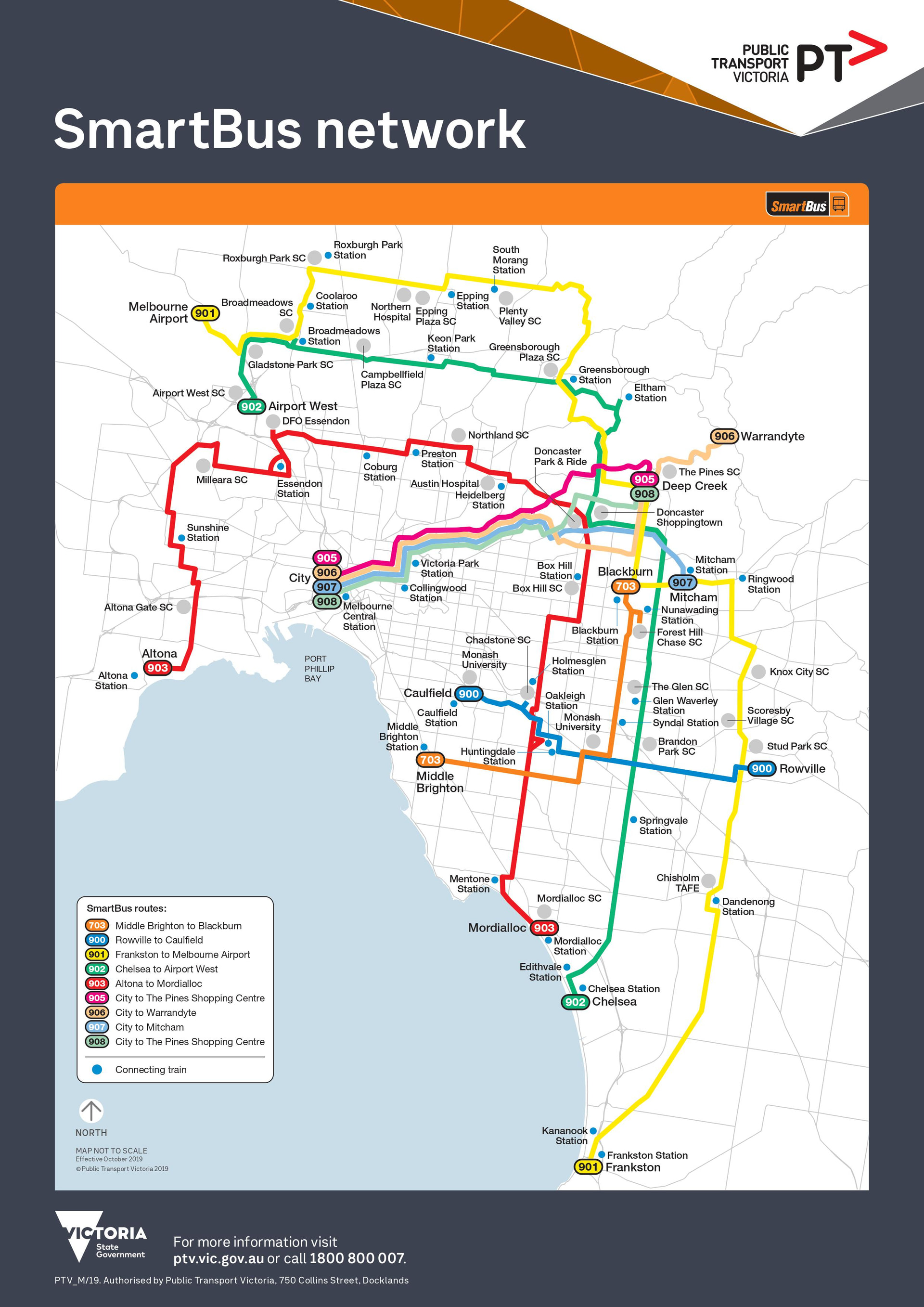
Secondly, while there may not be orbital rail between suburbs, there certainly is orbital transport. This existing orbital transport can of course be improved.

Melbourne Smartbus Network - Orbital Transport

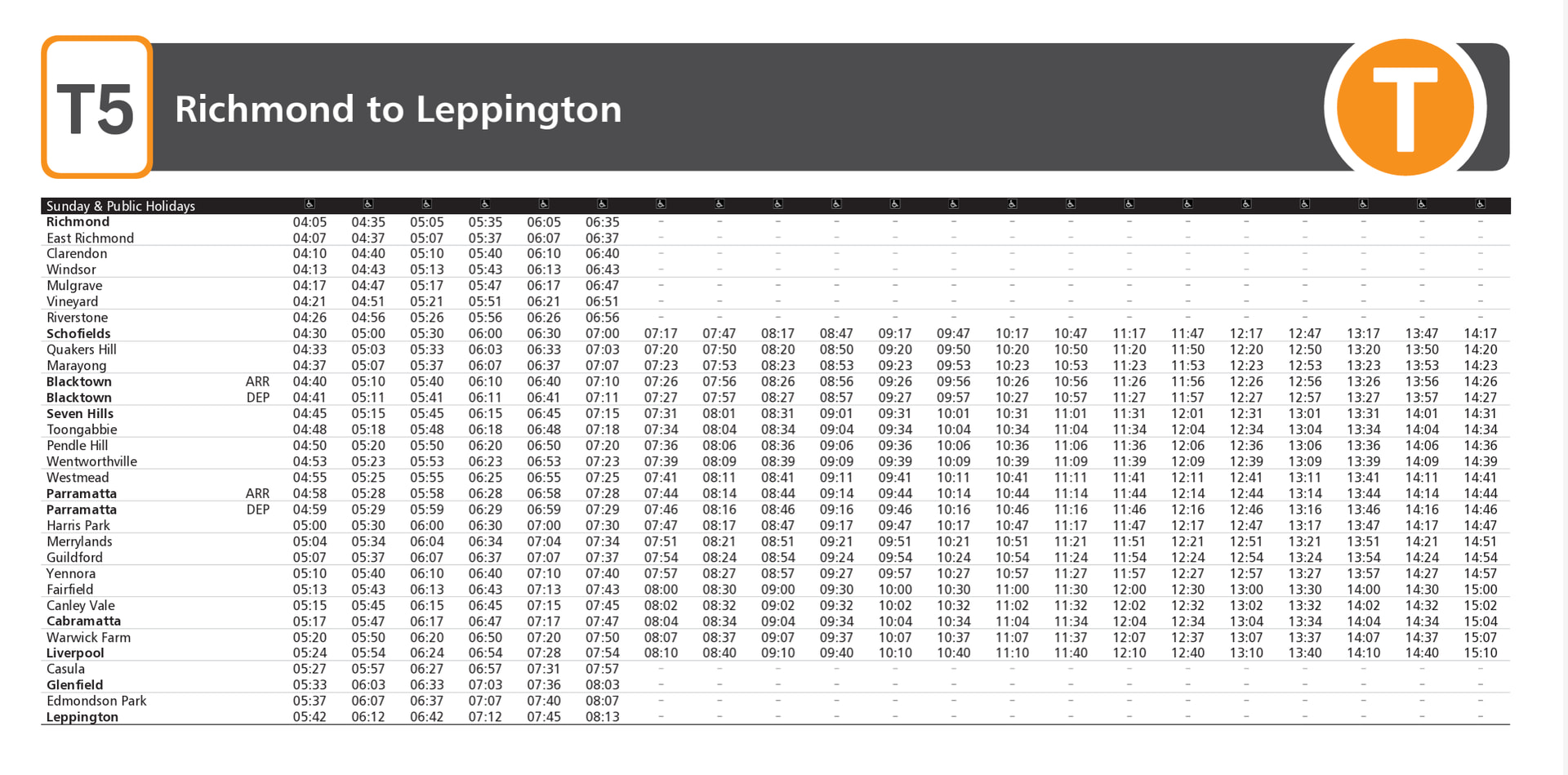
The growth and size of Parramatta cannot really be attributed to the T5 Cumberland Line (which doesn’t go through the Sydney CBD). Why?:

  • The service is half-hourly - most buses run more frequently into Parramatta than this train does.
  • It adds no new destinations that could not already be reached with a transfer between existing radial train lines at Parramatta (T2 <> T1).

It anything, it is the bus network doing a good job of orbital transport into Parramatta that supports it being a TOD.

T5 Cumberland timetable showing all day half-hourly frequencies

T5 Cumberland Line Timetable

With respect, I feel like you didn’t read my comment properly if this is your first response to it.

2 Likes

You have also consider North Sydney as a counterexample to say Burwood etc. That is a genuine CBD like TOD in itself, built around North Sydney station, no orbital railway and only recently got the metro.

North Sydney is very close to the city and western trains run there direct, so it really does have direct rail connections to other parts of the city.

1 Like

I would argue that North Sydney is not a separate urban core but an extension of Sydney CBD. A bit like the valley is an extension of Brisbane CBD.

If their respective CBD’s were elsewhere they probably wouldn’t sustain themselves.

In contrast somewhere like Macquarie Park in Sydney (while not the same sort of CBD urban fabric) or Parramatta stand on their own.

2 Likes

Yeah but before SRL maybe they could have built airport rail, electrified the melton line, extend the Werribee line to Wyndahm vale and extended upfield to Wallan via the Cragieburn line and the city loop reconfiguration project were all more important. Especially since places in the outer northern and western growth clusters around wallan and Wyndham vale are seeing rapid growth but are still relying on the same old vline trains and causing severe overcrowding. The Geelong line is overcrowded

Yes I agree, see the last paragraph of the comment you responded to. I would also add the extension of the Cranbourne line to Clyde.

1 Like