From a pragmatic perspective, Shaefer’s recommendation is not likely to be adopted. Rather, it is more likely that noise mitigation measures will be put in place. Noise IS a valid concern, and it does have mitigations that can be taken.
Every project has tradeoffs and freeway or motorway corridors offer a substantial cost reduction when constructing rail versus tunneling. I would expect the experience in Perth (which has recently built even more stations in the freeway median plus has a rail depot in the middle of one) would be less noisy than the LA case as they do tend to (partially) enclose their stations.
Not something you want to leave last minute for the 2028 Olympics.
Fun times ahead for the traffic planners trying to make LA accessible when half of the city will be closed off to cars, but at least they have a proper metro system going for them. They do not know how lucky they are.
Report clear says the mitigation measures were ineffective and noise levels remain above accepted levels. I guess this just goes along with most impacts from freeways - “Ignore them in the name of Progress”.
You’re right that noise is an issue, even if it is so far as discomforting or a nuisance, and should be minimised.
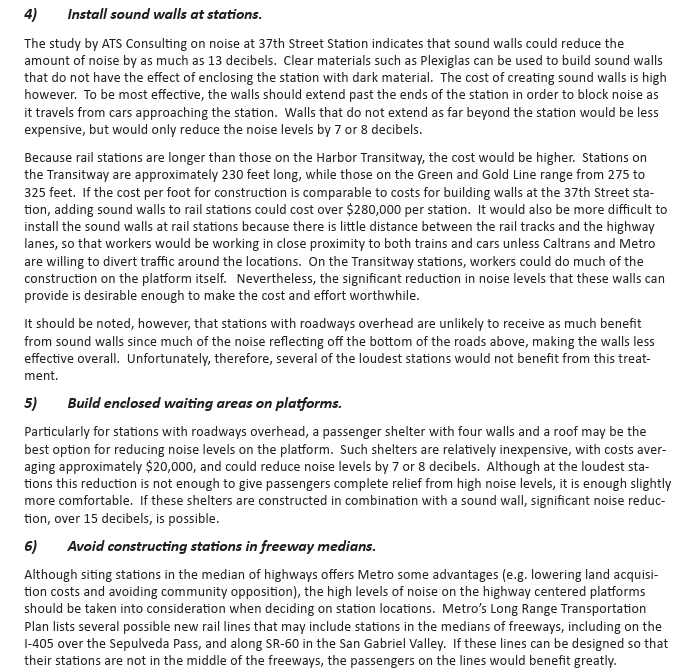
Schaefer’s report does list one of its recommendations as ‘avoid constructing stations in freeway medians’, however referring to Page 28 of this report, it is but one of many recommendations. The author also recommends including installing sound walls and enclosed waiting areas.
The mitigation measures taken in LA may have been ineffective because they did not go far enough (possibly due to cost reasons) - for example, the report recommends extending sound walls past the end of the station.
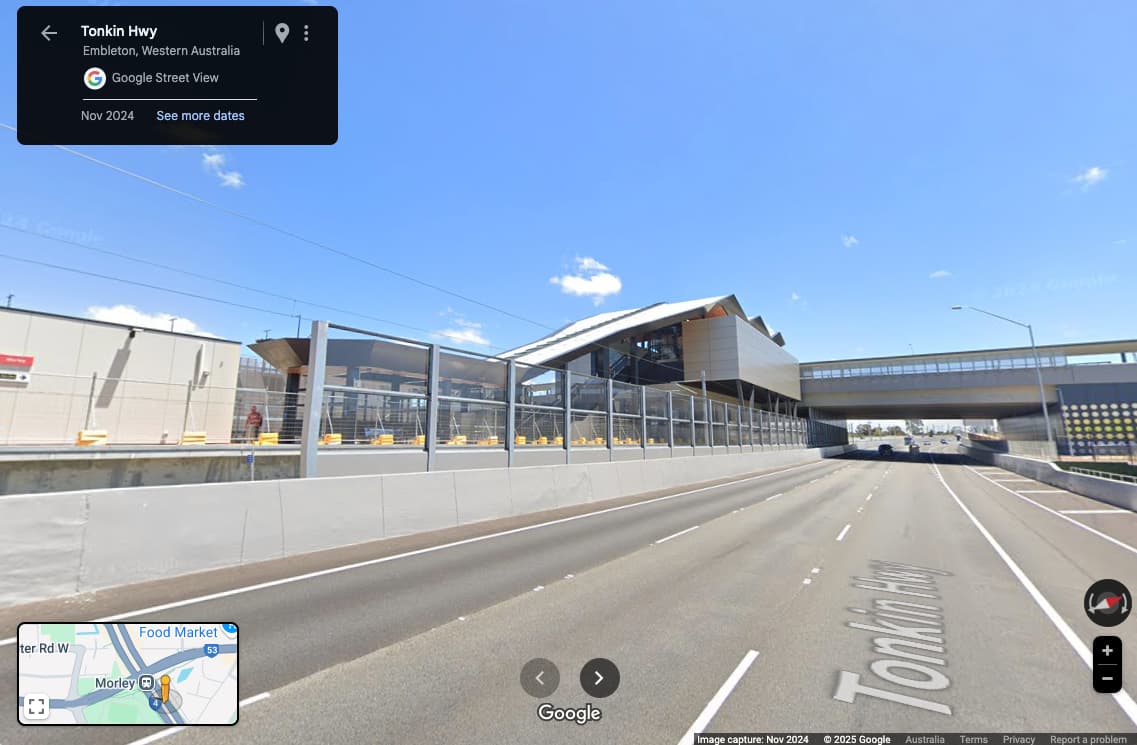
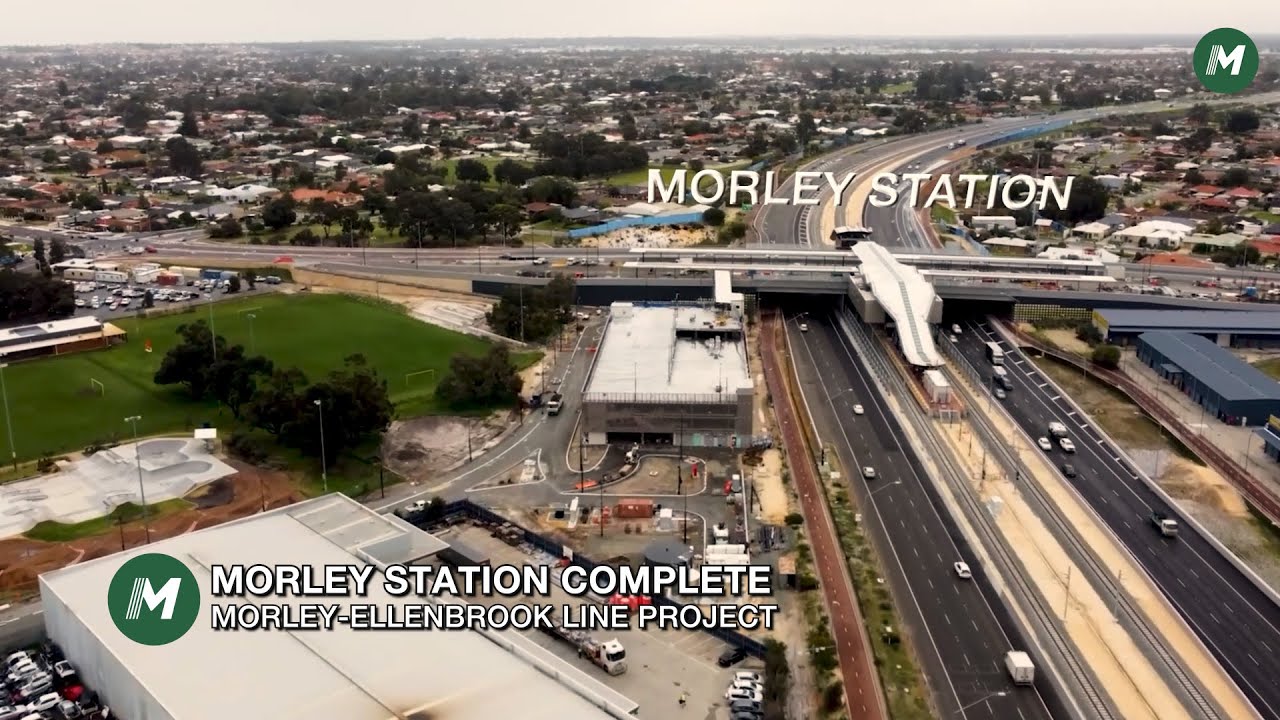
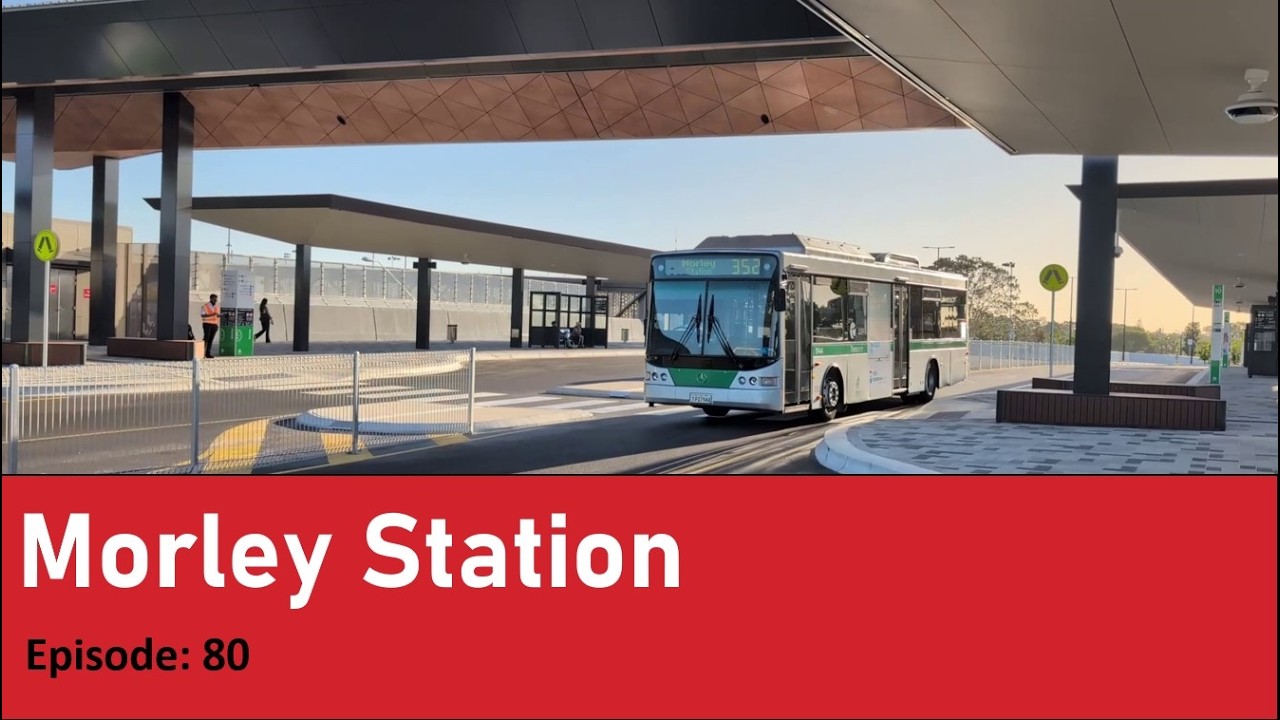
It would be interesting to see what the noise meter data is from Perth and if the results were similar or different to the LA study. Below you can see the newly opened Morley Station, located in a freeway median. The overpass carrying the road was removed and replaced with a new one as part of this project. There are high sound walls that cover most (but not the whole length) of the station.
Absolutely love using the Perth rail network. It never ceases to amaze me as to how good it is. I live south of Mandurah and catch the bus to Mandurah and then to the city regularly. It’s clean, the buses and trains are punctual and just a joy to use. Now, I use it to get to the Airport too for my trips overseas.
@SmashingBricksAU
The really interesting thing about the Metronet project is that most of it is being delivered on time and mostly on budget. The Armadale line is only a month or so late. Unheard of for government rail projects
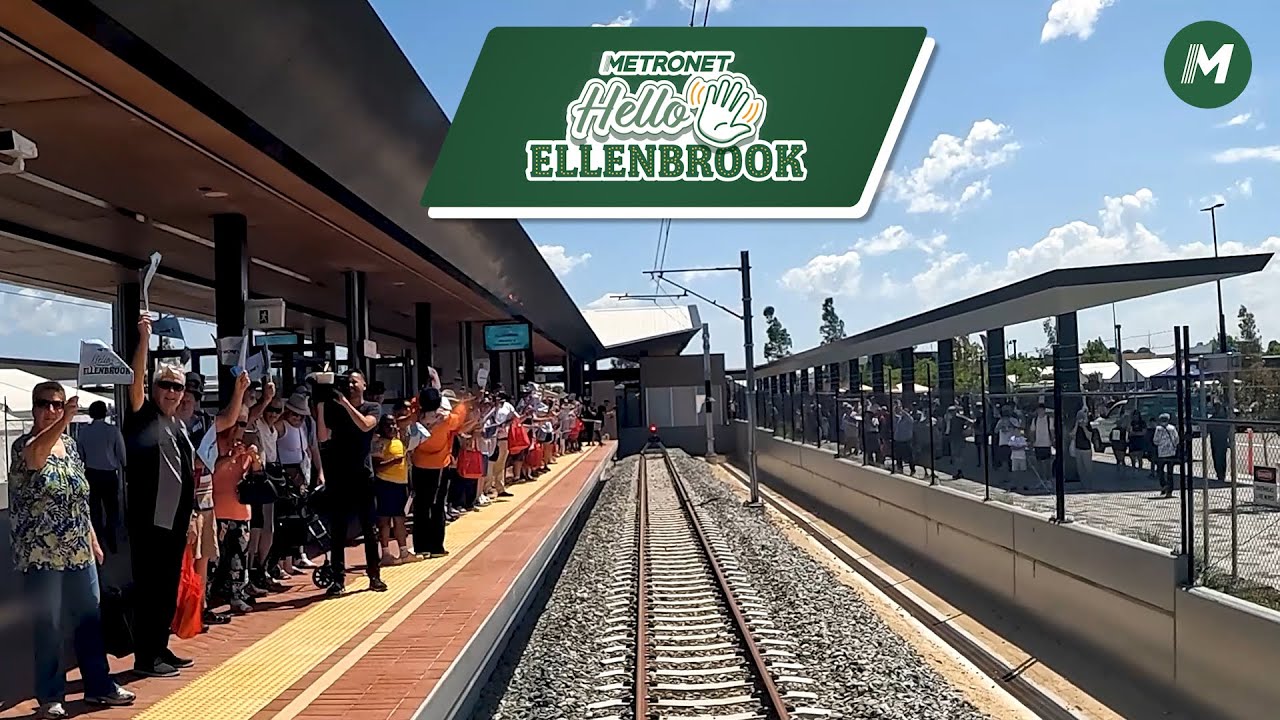
The ellenbrook line has been a god send. Not only the line itself but all the new bus lines that came with it
@julianelischer
living near Perth on the Fremantle line I suddenly get almost European levels of service when goin into town as both Ellenbrook and Airport lines through run past Subiaco so from Subiaco to Perth it’ not even worth looking up when the next train is coming becaue you never have to wait more than a few minutes (during regular hours).
Their train lines are newer and go to where the houses were built. Brisbane on the other hand is based on early last century rail alignments which have stations far from the popular suburbs where people live today. Trams kind of filled that void but now buses do that in Brisbane until new underground rail Metro lines are built. Yet places like West End CBD Valley and Newstead should have high capacity LRT to cope with population growth along that corridor. A subway is good but street activation is better with LRT.
It’s something we have known for ages. The only way forward is TODs around stations, Feeder buses, BUZ stops at stations where BUZs services can integrate with rail more effectively in addition to Park and Ride and segregated active transport paths from adjoining suburbs to the stations.
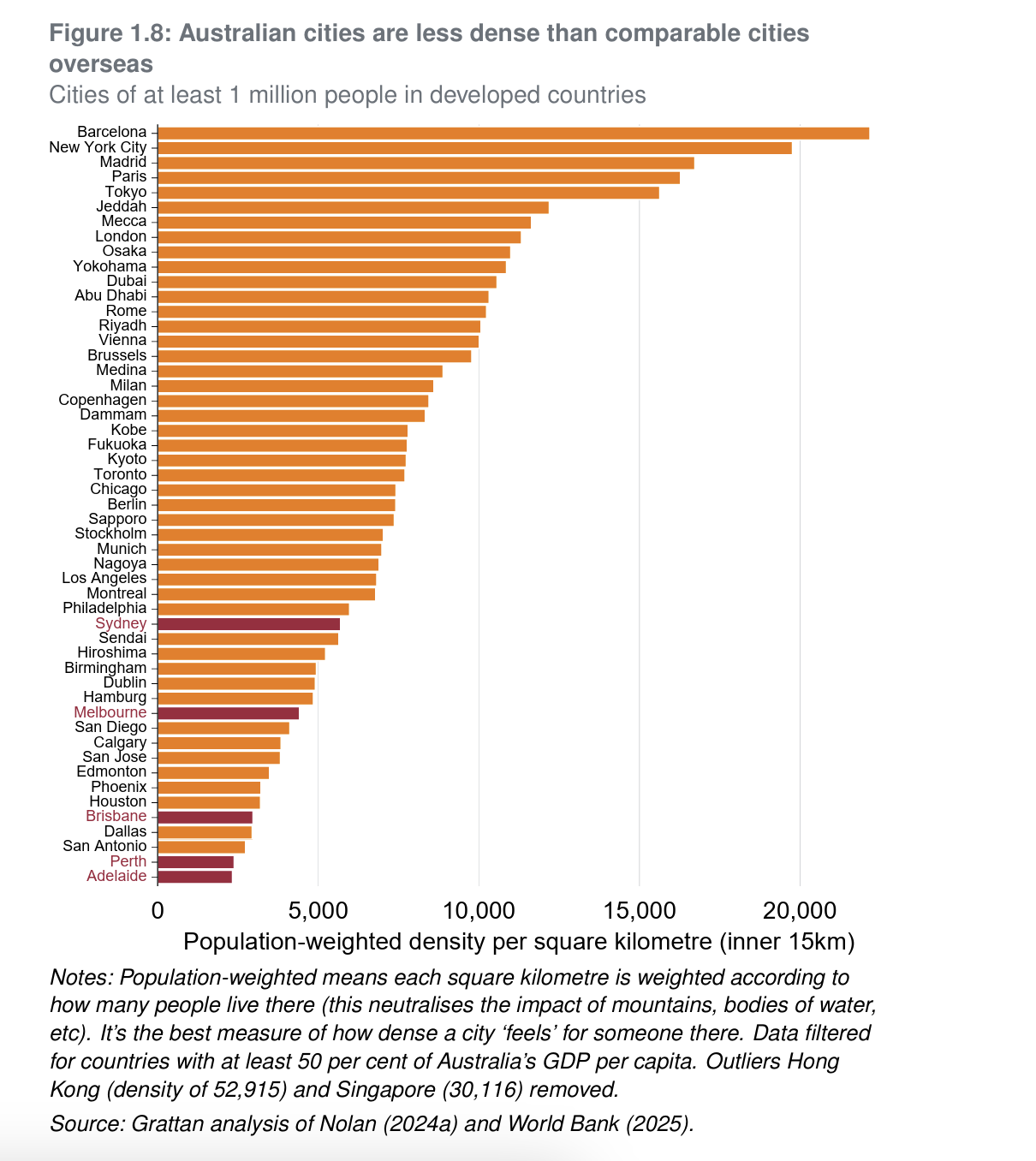
It doesn’t. You’re extrapolating from the available data in a way that the data doesn’t support. All it demonstrates is that the inner 15 km of Brisbane is more dense that Perth.
[quote]* Density is also standardised to be for the inner 15 km (to allow for comparison across cities).
For Brisbane, this is approximately the BCC LGA area.
[/quote]
Assuming they are measuring in a circle from some point in the CBD, that’s an area of 707 km, so roughly half the area of the Brisbane LGA.
Distance from Brisbane GPO to:
31 George Cct, Bald Hills - 17.6 km
56 Dampier Cr, Drewvale - 21.3 km
337 Upper Esplanade, Manly - 15.8 km
134 Jarrah St, Moggil - 19.6 km
So no, it doesn’t even include the urban footprint of BCC.
Most bus routes in Brisbane are under 15 km in length.
I think is fairly safe now to say Perth is much less dense than Brisbane; feel free to present evidence to the contrary - e.g, the weighted density figures for Perth and Brisbane with your preferred, adjusted methodology.
One thing I like about the WA PTA is rather than go on about low density and how it’s all too hard, they provide 15 minute all day train service to all 70+ Perth train stations on a weekend. And, that’s for locations up to 70 km away from the Perth CBD. You won’t get that in Brisbane, not even on a weekday!
Maybe but not necessarily. Perth has a higher population weighted density than Brisbane prior to 2010. Both are increasing now at similar rates but that’s not guaranteed to continue.
See, I’m not actually making that point. And the data isn’t “flawed”, they’ve just taken a certain approach/methodology so that they can compare across cities of different shape or size, consistently.
You can say you disagree with the approach/methodology, but the data isn’t fabricated.
I don’t think it’s a bad approach at all, it compares like areas for like areas across different cities, which makes sense.
The alternative, comparing continuous urban boundaries is more tricky because now you’re comparing very distant places like Coolangatta and Maroochydore as “Brisbane”.
The other thing is, a 15 km radius is roughly a 30-45 min one way trip. This aligns with the Marchetti constant, which is the time budget that most people have available for commuting one-way.
Again, I think it’s fair to conclude Perth < Brisbane in terms of density, unless there is compelling evidence to the contrary.
I’d invite you to outline your alternative approach that might address the perceived flaws, if you have one to suggest.
Perth is much more a boom/bust type environment, when things are good, it looks and feels good, when things get tight, it’s last one out, turn off the lights! Nice enough place to visit and a good initial enty point to Oz for new arrivals, looking at generally affordable initial options, but if you want to be part of the real action, you’ll end up heading East!
Not knocking the place, as they say it’s a “pretty city”, but unless you’re well “grounded” to the city, you’ll likely, in time, find it a bit wanting!
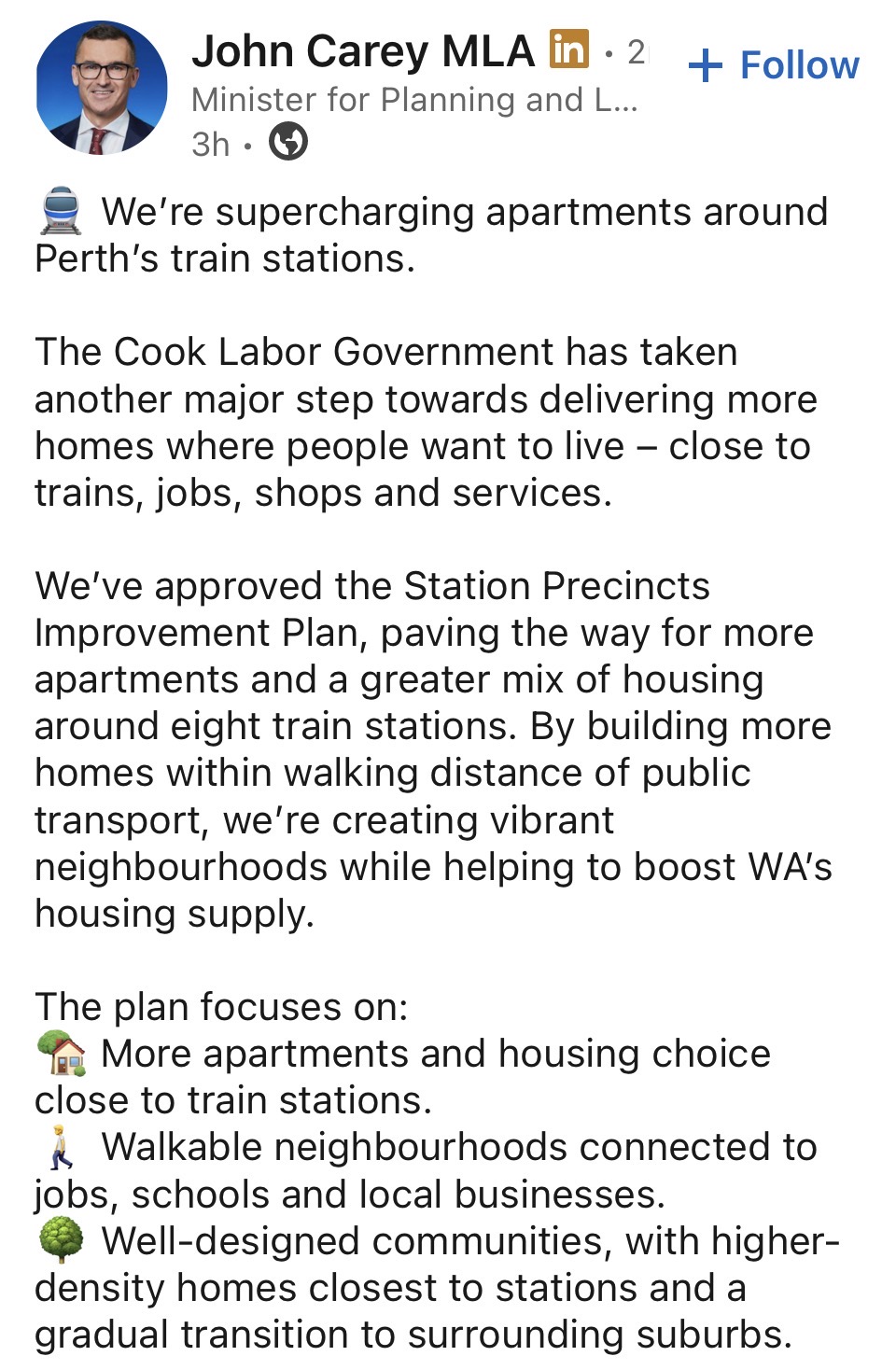
It is good to do that, but remember that TOD is more than just apartment blocks - a TOD includes retail and commercial and community uses as well as dense housing around stations to develop a walkable community. Hopefully that is all a part of it.