One of the worst decisions ever made for public transport for Brisbane removing the tram network. The trams at their peak carried more passengers than the whole of the SEQ PT Network does today.
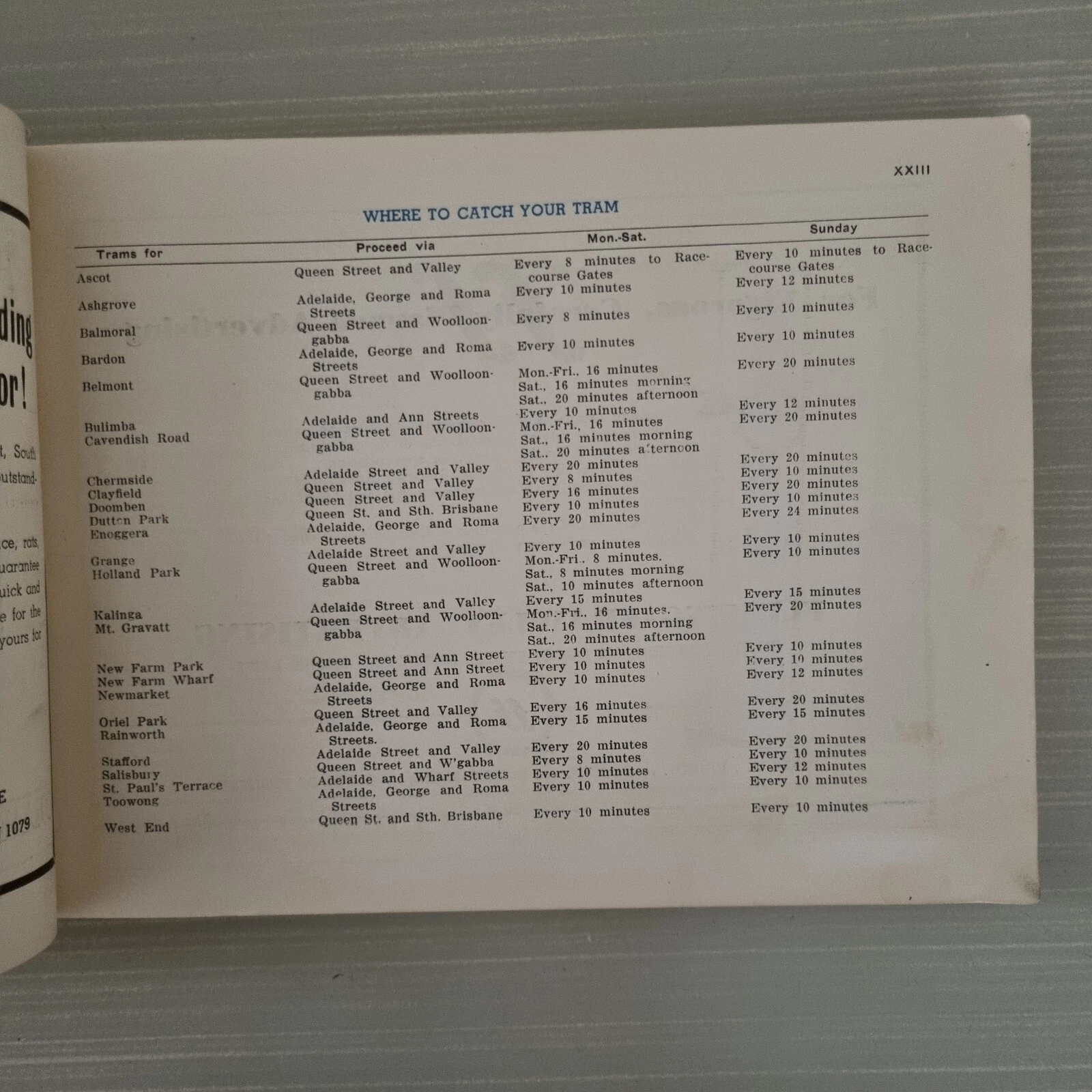
Brisbane Tram Network Timetables (1968)
Provided with permission from the Brisbane Tramway Museum. I will try to expand this timetable compilation out as images when time permits.
Notice how the tram to Balmoral ran every 12 minutes in the off-peak.

tram_tt_1968.pdf (2.8 MB)
Ipswich Rd Annerley bogie saloon tram outside Chardons Hotel c1920. Photo: SLQ Neg 18793
I’ve started collecting old street directories from around Australia and just discovered an old street directory for Brisbane from the 50s/60s. What suprised me the most was the frequencies for the old tram network.
Take a look!
Very interesting !
Consistent all day frequencies 
Worst frequency on a Sunday is every 20 minutes 
Compare that to the utter mess of frequencies we have now. The end of the trams in Brisbane wasn’t just the end of one mode of service, it seems to have marked the end of sensible transport planning.
We do have the BUZ and CityGliders as of today though; they run pretty much every 15min all day even on weekends and public holidays. I guess that there are as many BUZ and CityGlider routes as there were tram routes back in the day.
A major difference is that the frequent routes serve a much smaller percentage of the population than back then. There needs to be a massive expansion to catch up with 1960, let alone 1946.
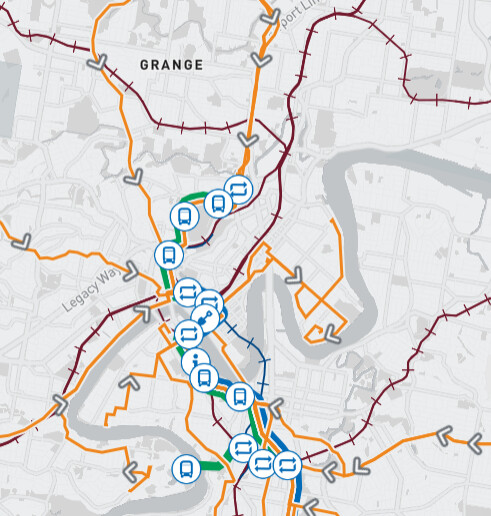
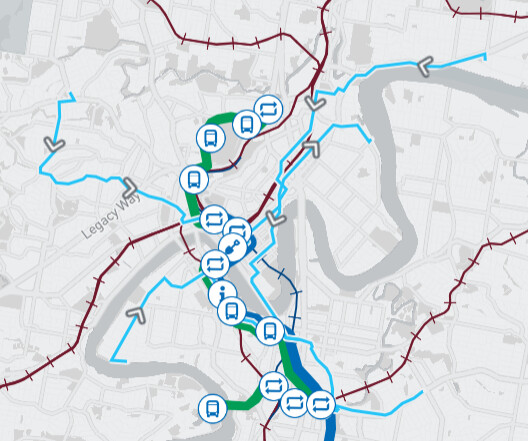
BUZ and CityGlider networks (excuse the Betro overlay)
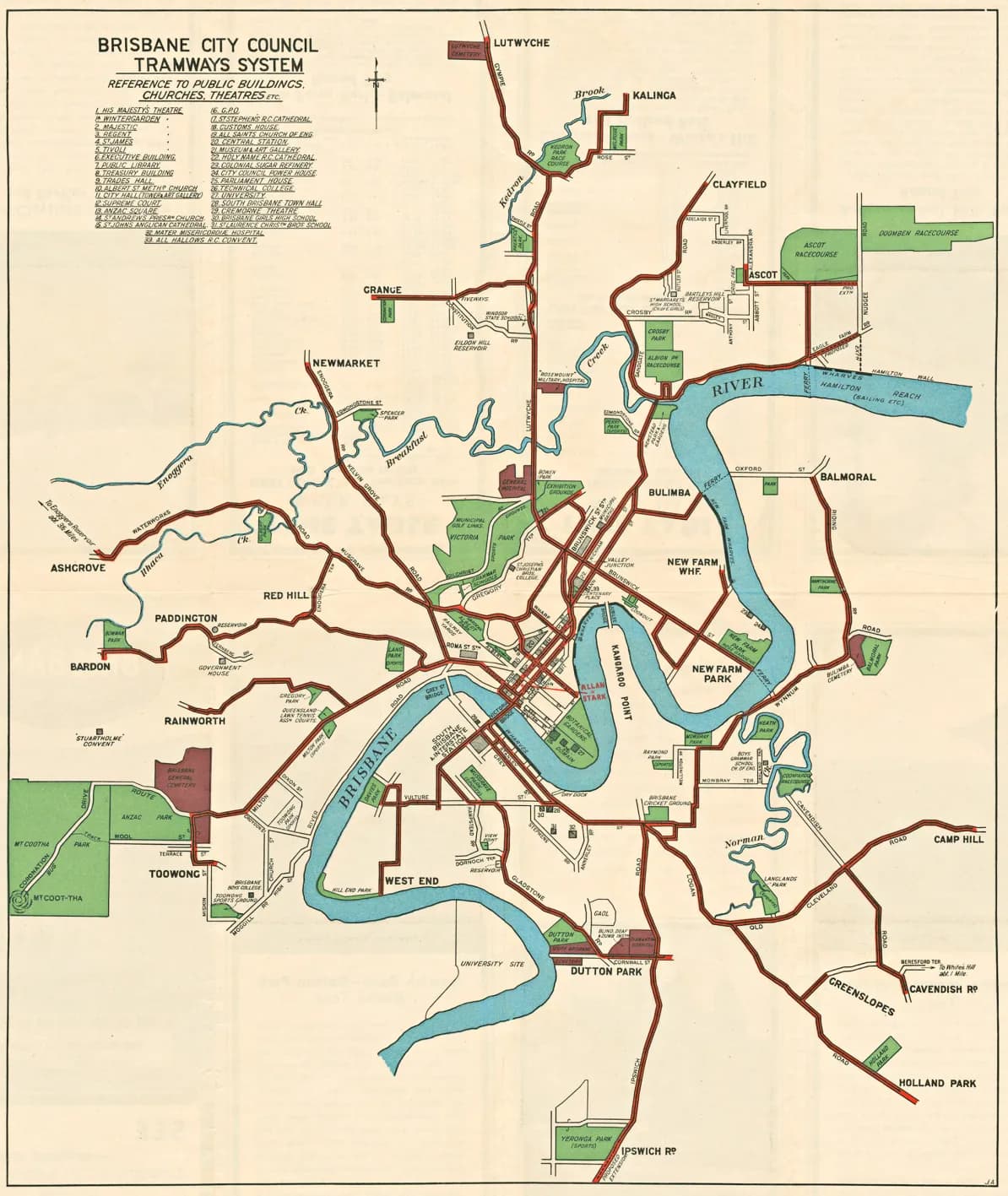
Tram network
The BUZ and CityGlider routes pretty much seem to have the same coverage as the trams back in the old days. The only exceptions seem to be that trams appear to serve Clayfield, Ascot, Balmoral, and Paddington areas better than the BUZ and CityGliders.
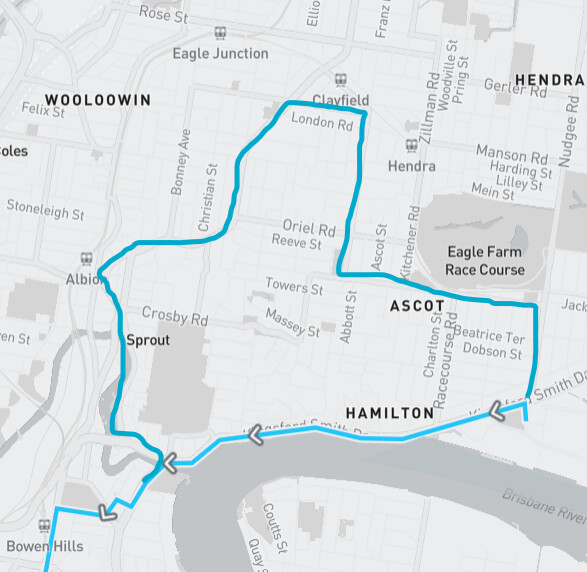
Perhaps the Hamilton CityGlider could extend to Ascot and Clayfield via Nudgee Road, Lancaster Road, Alexandra Road, and Wagner/London Road. Then the CityGlider could loop onto Sandgate Road to return to the CBD via Albion and Bowen Hills.
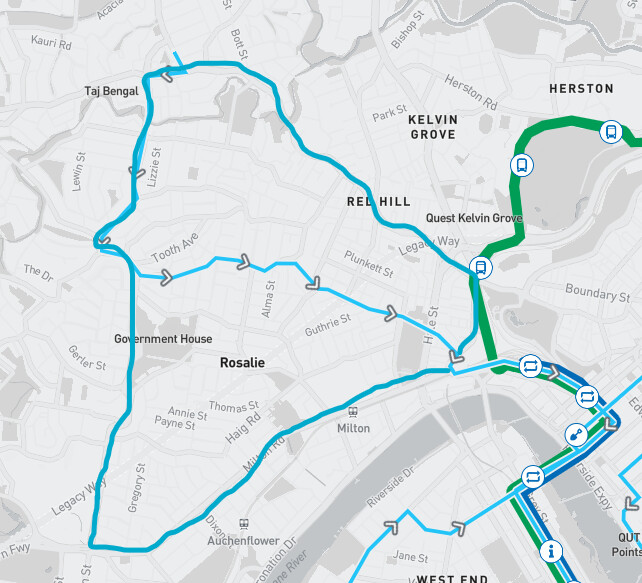
The Ashgrove City Glider would be rerouted onto Waterworks Rd, Jublee Terrace, and Milton Road rather than copying the 385 BUZ on Given and Latrobe Terraces. This would increase the coverage of high-frequency bus routes in the inner-western suburbs.
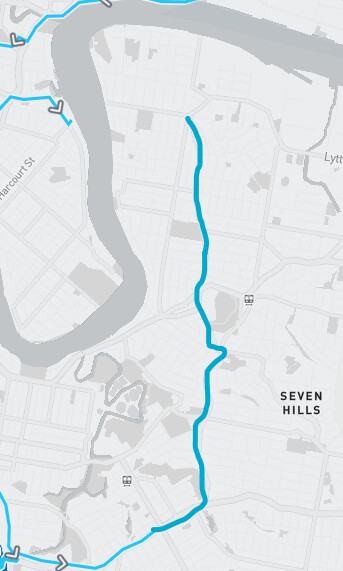
Finally, the Coorparoo CityGlider would be extended towards Balmoral via SR10, turning back at the Balmoral Roundabout where SR10 terminates.
My updated CityGlider route map to provide similar coverage as the trams.
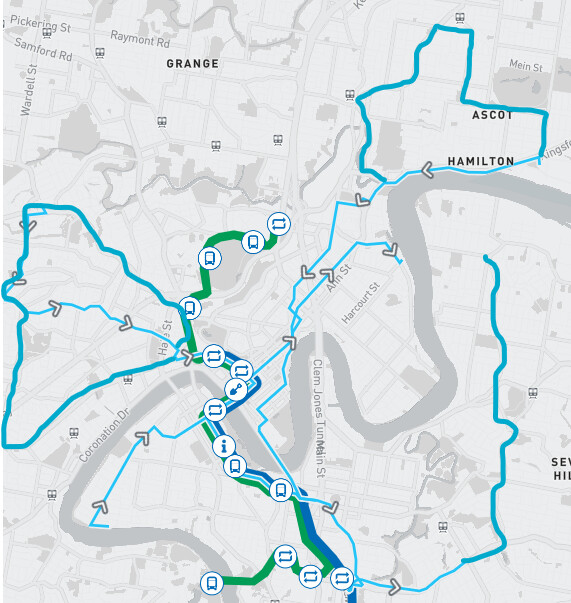
The BUZ network could remain the way it is currently.
We have a BCC 1968 tram timetable earlier in this thread.
The biggest difference is the trams ran cross city and didn’t require people to switch routes in the CBD. This needs to return…just needs BCC to let go of the Brisbane CBD is the centre of the universe thinking!
The yet-another-bus-name Gliders show how popular cross-city routes are.
I also wonder if route 26 will prove similarly successful
There’s no hard data yet, but anecdotally, route 26 seems to be doing quite well. It’s a shame that it only runs in peak hour.
I think you may have meant though routing, where services continue though the city to the other side, like trains currently do.
Buses are impacted by route length and reliability. The longer the route is, the more likely it will be impacted at some point. This can propagate delays across the city (currently the rail network suffers from this at times).
Trains are though routed as the corridor is Priority A and not as impacted by delay, although some services terminate in the city (Roma St or Bowen Hills).
I think BCC may have looked at it before, but it does require high levels of priority, which is hard given the much higher traffic on the roads nowadays.
I agree, the existing length of some of the major trunk services I think precludes the ability to through route them. Routes like the 140 and 555 are ~45-50 minutes end to end already, and the 130 is only a few minutes short of an hour. Much longer than that is when I feel you end up with routes that become a bit too unwieldy and extra prone to delays.
Personally, I think the only routes really suitable to do this with are inner suburb services passing through the CBD like the Gliders/199, etc, or a limited stop crosstown service like the 26 - it gets from UMG to RBWH in just over 30mins.
This has always been why bus lanes on all major roads is a MUST!! Why they don’t exist is a major failing. Always has been.
Plus also makes me wonder why bus has been the public transport priority for Govts when its own abilities limit its usefulness. If as a mode it can’t handle cross-city or through-routing, then it does not fit in today’s world. Not sure it ever did.
There are large areas of Brisbane with no rail service, for example Ashgrove, The Gap, Albany Creek, East of the Beenleigh line.
In many cases rail has a limited walk up catchment as well, so a bus connection is necessary for a passenger to reach the station first.
Much could be done to improve bus flow, starting with transit lanes on Coronation Drive and filling in gaps on the Northern Busway.
Out of the big AU/NZ cities, Brisbane & Perth are actually quite unusual (& lucky) in that our trains have pretty much always been through-routable to some degree.
This wasn’t the case for Sydney and Melbourne until they completed their city loops in the 1950s and 1980s respectively, Auckland is building their loop now, Adelaide is barely starting to consider one.
Of course a great many cities around the world like Paris didn’t originally have through-routed mainlines, but rather rely/relied on their subway systems to connect one or several termini stations. Wellington is in a similar situation to this day. Come to think of it Brisbane also was in this situation for the southern lines pre-Merivale-Bridge.
I think it’s also important to consider that Brisbane’s trams were operating in a much lower-traffic environment in their hey-day; I understand once car traffic grew substantially postwar their reliability dropped quite a bit.
All of which is to say, if you’re working with class C right-of-way you’re never going to have great reliability outcomes. Most Melbourne tram lines don’t really through-run either.
Which is why Class B ROW for buses/light rail is a MUST/Minimum.