Real bad news. Abandoning the northern part of Inland Rail (northern NSW and Queensland).
1 Like
Just creates more road trains on the road in addition to more road maintenance. The state government will ask for funding to make the Warrego from Toowoomba 4 lanes in each direction now.
Obviously this is curtains for any dreams of faster rail to Toowoomba.
Economically I have seen some perspectives that basically argue the cost is so high now that the BCR’s swung negative, plus it’s crowding out other work with a better return.
1 Like
It does raise the age old question though: why is building rail infrastructure so expensive in Australia?
1 Like
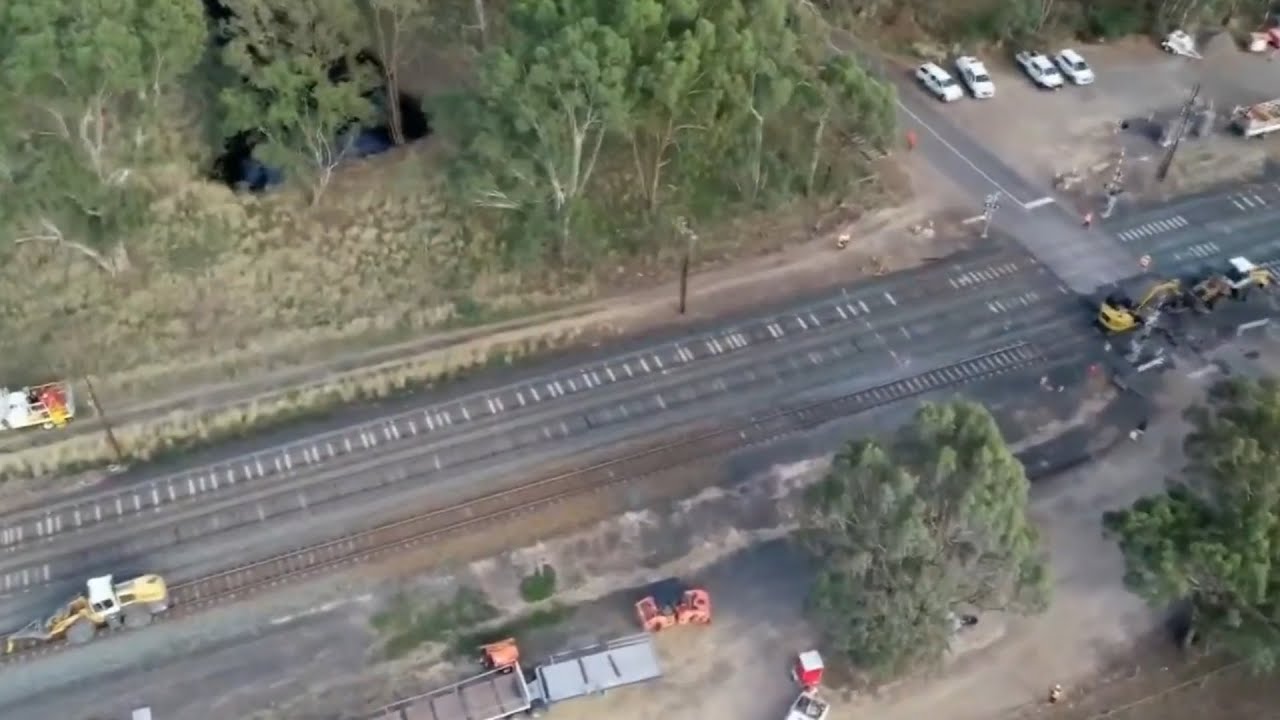
Really hope the QLD section can be utilized in dual sense for BNE to TWBA passenger sections with Parkes to Twba in future once they fix all issues
Because governments treat rail projects as ad hoc tasks and then lose talent and experience to the private industry, and then pay triple for the same people/skills that should of remained in-house.
Because contractors/consultants charge way more than they should and get away with it, treat government money as ‘free money’ rather than a service.
The Inland Rail’s aim was this unrealistic goal of Melbourne to Brisbane by 24hrs exactly, and the alignment they chose had to fit into this 24hr hard requirement, even if it means running through floodplains, or over challenging terrain, where alternate routes would of been less risky and cheaper were identified, but were not considered it would of added to their precious travel time.
They chose dumb and greed over environmental and engineering practicality, and that is why the project got scrapped.
Let’s see if Gladstone - Toowoomba proposal is back on the menu.
3 Likes
1 Like
Because we insist on privatising everything and setting hugely complex financialised bespoke contracts, usually to international companies, in which half the cost ends up going to consultants and investment banks.
If we just had some capability in government to build a pipeline of work we could do it for half the cost. It is definitely possible because that’s what France and Spain do and they build things much much more cheaply than we do. It costs half as much to build a rail line in socialised France than it does in the privatised United Kingdom even though the wage rates are about the same in both countries.
3 Likes
There’s a few reasons. Wages in Australia are expensive. This feeds into everything else, for example, the cost of transport. Getting rails from Whyalla to central west NSW is expensive, along with other construction materials.
We also have a massive labour shortage. Not just tradespeople, but also semi-skilled construction workers. This feeds directly into higher wages.
Workers’ wages are not the main part of the cost of major projects. It would make your eyes water how much consultants and bankers make from Australian infrastructure projects. And all the risk ends up with government.
1 Like
My personal thought on that is because Australian cities are quite a long way apart comparatively speaking to other countries and their cities, not helped by hilly terrain on the eastern part of Australia with the Great Dividing Range that makes any infrastructure along the eastern coast more complex.
1 Like
All that work north of Moree out to North Star for probably 0-1 grain trains per year.
What a waste.
I would like to see QLD get some sort of in-kind investment for regional rail resilience and revitalisation. I’m sick of all the 15kph speed boards out here on the Downs, and we should at least be able to maintain our network to the standard on the network diagrams.
Or maybe a contribution to build a Little Liverpool Range tunnel, which would save 15 minutes between Grandchester and Laidley and unlock the Lockyer Valley for passenger service.
I feel like for all these now-broken promises, QLD should get something out of it all.
4 Likes
The loss of institutional capacity in state and federal governments has been (at least IMO) a total disaster. We save a marginal amount of money having less public servants on the books, and in exchange pay through the nose whenever we want to call on that capacity for some project. In practice all we’ve done is establish another method whereby taxpayer funds get funnelled directly into private hands for little to no benefit.
Now that we don’t have to consider Inland Rail, how much would a 5km, single track tunnel for narrow gauge and to QR loading gauge between Grandchester and Laidley cost? That would transform both passenger and freight traffic and, as you say, open up passenger services to the Lockyer Valley. Wouldn’t even need to have overhead if we acquired some battery/electric bimode trains.
2 Likes
If I’m remembering my inland rail schematics right, the proposed Little Liverpool Range tunnel was only about 1km long but there were significant earthworks at either end. The orientation would allow interconnecting at the Laidley end with little effort, but a few km of new open air track west of Grandchester would be needed. We also the terrain and geology since the existing track has 2 tunnels. I don’t think it would be the biggest project in history.
If its such an important project then why doesn’t the QLD Government finish it off?
My thinking was the simplest smallest project to get a decent alignment. No standard gauge, no double stacked containers, no over head power, and single track at 100km/h or so. It would still be plenty to get a viable and much much faster passenger service as well as improved freight and might be affordable.
Same story - half the project at twice the cost. In the end, the project simply priced itself out of existence.
And this was for a surface level freight rail project mostly running in non-urban regional and rural areas with minimal tunnelling.
Now, take this and apply it to HSR.. You have tunnels, you have strict design requirements, you have urban areas.
1 Like