I’m trying to figure out new things to push for in the new year as part of my own social media so i’m looking for your opinions on this topic.
With respect to the previous Brisbane City Council Bus Bike trial, Should vehicles intended for use on railbus services (TMR fleet ?) have bike-racks installed for sole use of rail replacement?
Arguments against:
Massively increases dwell times
Public may not know how to use it, requiring the driver to constantly deseat
Inconsistent enforcement may cause passenger confusion (ie. regular bus servicing)
Arguments for:
With bikes currently allowed on our train services, individuals are able to make longer trips other than train stations if they so choose. Losing that bike access temporarily may be a genuine reason to favour private transport.
Maintains support for longer, multi-service journeys.
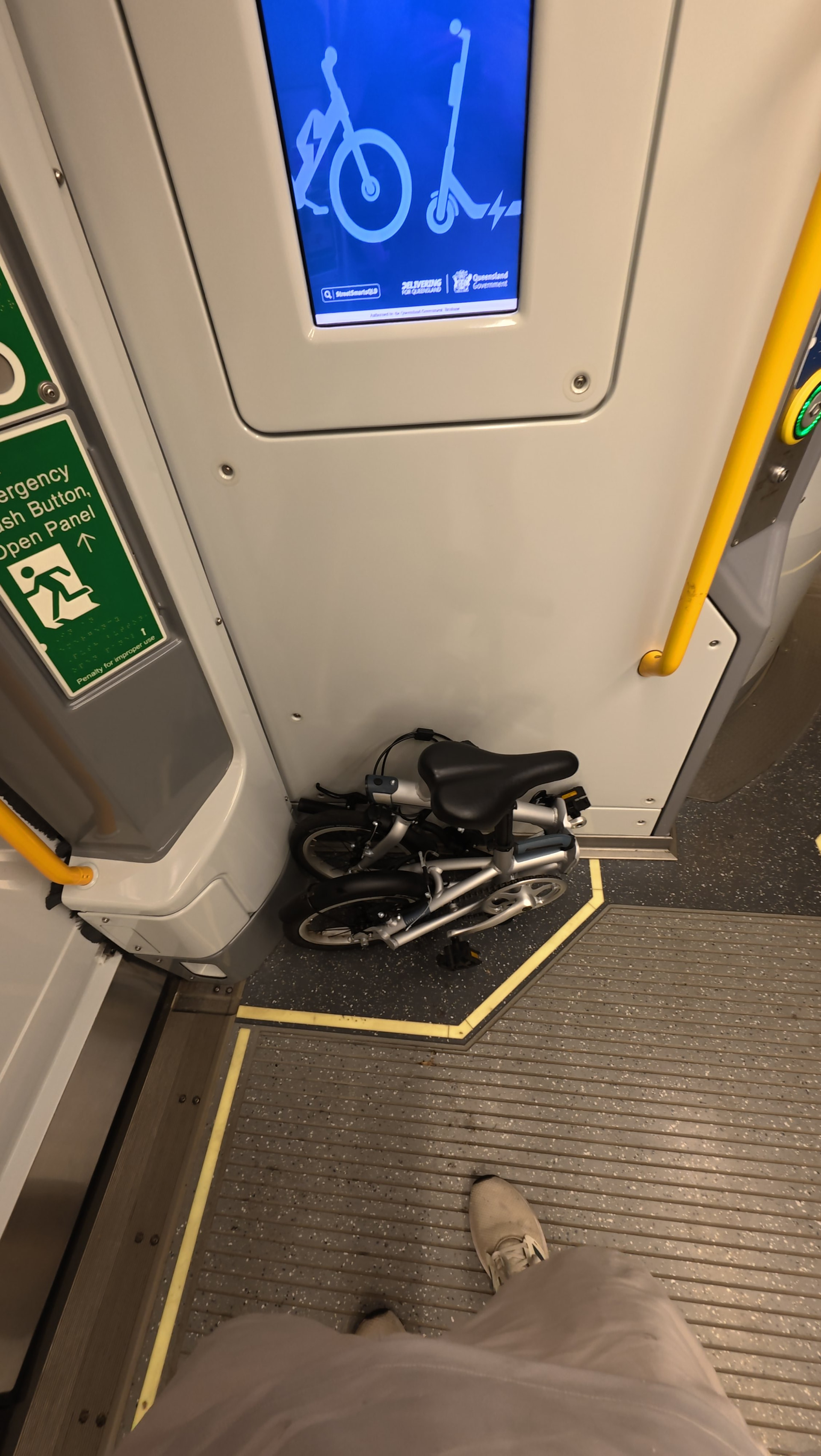
We allow bikes (and scooters) on trains opportunistically because there’s a bit of spare space.
Pre Covid it wasn’t allowed in peak at all (and there wasn’t space!) but it was allowed off peak, when there was a reasonable assumption of space being available.
So let’s apply this same principle to rail buses. Given they’re in a disrupted situation at the best of times, we can’t really make this assumption of space being available.
A point I would add is that the buses used for rail buses are not a dedicated bus used for only that purpose in most cases - some are standard PT buses used for general Translink route runs outside of Rail Bus duties, while others utilise operators’ chartered coaches.
I don’t know whether the impost of having to fit bike racks to these buses for what is an occasional use, is one that should be pursued. This could be an issue especially in the case of chartered buses, which would be owned (or perhaps privately leased) by the operator rather than leased from the state.
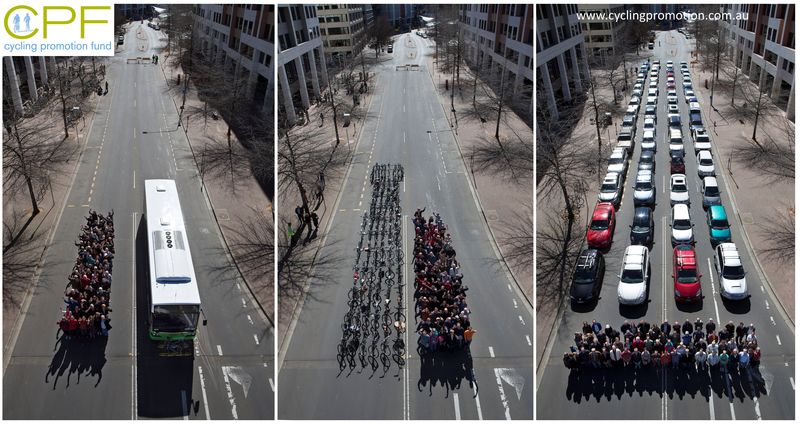
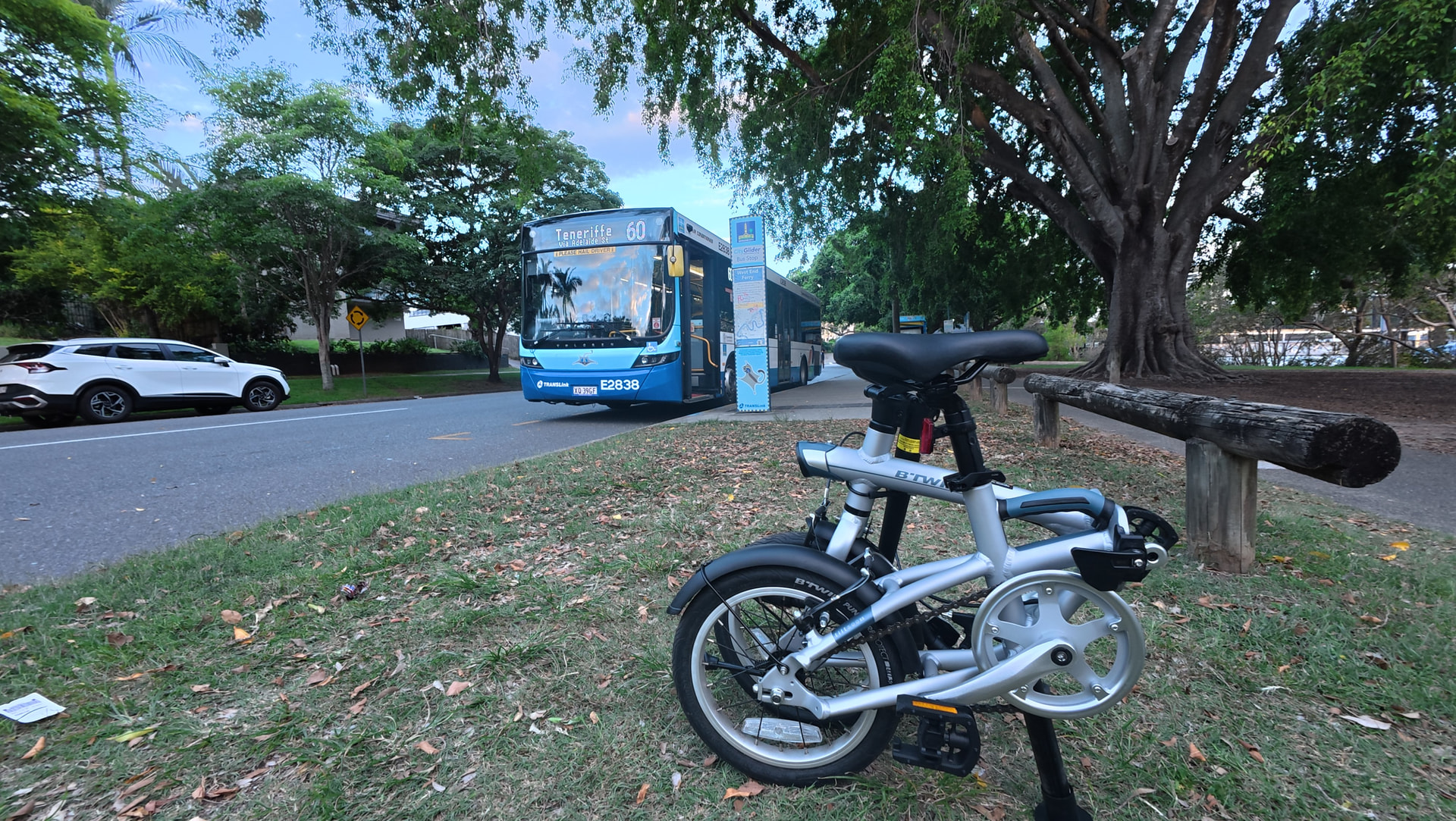
This photo makes at least three important points, two of them probably not intended. In this one image you can see that:
Bike racks on buses (and most other transit) can never be more than a niche market.
The rack on the bus in pic #1 carries two bikes, which is great for those two people. But if all the bikes in pic #2 try to get onto the bus in pic #1, we have a geometric impossibility. Bike racks are already as large as they can be if the driver is still to be far enough forward to drive safely. A non-folding bike inside a transit vehicle takes the space of several passengers, so could fairly be accommodated only at several times the fare. In the ideal sustainable future, you will have to park your bike at the station, or return your rental bike, just as Europeans do. If transit does accommodate your bike, you really should pay a fare premium that reflects the rough number of passenger spaces displaced, or the supply/demand ratio for 2-3 bike racks vs 20 people wanting to use them.
Canberra has bicycle racks on most of their buses.
More than 90% of Transport Canberra buses are equipped with bike racks. Bike racks on buses each hold 2 bicycles with a maximum weight of 25 kg per bike. Bike racks are available on a first come, first served basis.
Do we have any stats on the usage of bike racks on buses in Australia/NZ? As above, Canberra has them, some regional areas of Victoria do too (Bendigo I believe is one of them?) and Christchurch NZ is another.
I’m not for or against the idea, just curious if that data is available?
Another issue is that many bikes and the like today are electric. The lithium batteries can have faults and are a fire hazard. eBikes and similar were recently banned by Sydney trains for this reason.
So it would need to be specific, if allowed.
Train passenger update: Converted e-bike ban
Wednesday 22 October 2025
Converted e-bikes banned from NSW trains from 1 November 2025
From 1 November, converted e-bikes will no longer be allowed on Sydney Trains, NSW TrainLink, or Metro services. Under the new regulation, lithium batteries used to power converted e-bikes (whether attached to the bike or carried separately) are prohibited across the rail network. This ban is aimed at keeping passengers and staff safe from the risks associated with some lithium-ion batteries.
Converted e-bikes are regular pedal bicycles that have been fitted with electric motors and batteries. They’re more likely to catch fire because of DIY setups, poor wiring, and low-quality or second-hand parts.
I don’t mind bikes being allowed on buses, as long as it doesn’t take away access for people needing the accessible area (wheelchairs, blind people, prams etc). And yes, BCC did try this with a bike rack on the front of the bus, but decided that it wasn’t worth it and frankly a bus could only take one bike at a time. Trains have the capacity to take bikes given they are much larger vehicles, buses, not so much. Better to have bike racks and secure bike lockers that you can hire out at key interchanges.