Road Network Observations and Projects

"Motorists will face a commute of up to 2.5 hours between Brisbane and the Gold Coast in the next two decades, as up to 30,000 extra cars clog the Pacific Motorway each day.

Data released exclusively to Brisbane Times can reveal Transport and Main Roads’ forecasts of congestion blow-outs and soaring traffic on the motorways to the Gold Coast, Sunshine Coast and Ipswich by 2046."

Well, how could anyone have possibly seen this coming? Seems likely that even the ancient, windy GC/Beenleigh line will be faster than the M1 in a few years. The question is, will there be enough capacity, even with the current LGCFR project? My thought is no. We desperately need more capacity between Kuraby and Dutton Park. How that can be achieved, I don’t know.

I guess the other alternative is a second railway corridor between Beenleigh and Boggo Rd, which would largely leave LGCFR as superfluous to requirements, at least for now. Maybe in the future, GC trains would need to run via both corridors simply to have sufficient capacity.

There should be a sub 1hour train from Brisbane to GC.

Where on the Gold Coast? I mean technically, there already is. Central to Ormeau is 58 minutes. It’ll probably get a few minutes quicker once CRR opens, given that Central-Boggo Rd is currently 13 minutes.

4 Likes

Huh. On current timetable the GC trains do Loganlea to Beenleigh in 10 minutes but Beenleigh to Loganlea in only 8 minutes. That’s ~10 km/h faster!

I imagine that’s because the outbound GC train catches up to the Beenleigh all stoppers just before Beenleigh and has to wait for it to clear the platform.

3 Likes

Is it even a trip down the coast if you don’t have that crawl into Beenleigh.

6 Likes

It’s already taking that long. If it keeps up, it will be taking us half a day just to get anywhere

Hopefully when the LGCFR is online that can be revised.

Why new roads do not solve traffic congestion – and how to do it

Traffic congestion is a persistent issue in urban environments, often leading to calls for increased roadway capacity. Conventional transportation planning assumes that reducing congestion increases economic productivity and social well-being by allowing more vehicle travel. However, emerging evidence suggests that beyond an optimal threshold, increased roadway capacity can lead to adverse effects, including induced demand and inefficient resource allocation. What are the mechanisms of traffic evaporation and its implications for urban transport planning? Here is a summary of the latest works from transportation researcher Todd Litman of the Victoria Transport Policy Institute in Canada.

The Concept of Traffic Evaporation

Traffic congestion maintains equilibrium: as congestion increases, travelers adjust their behavior by modifying their travel schedules, selecting alternative routes, or opting for different modes of transportation. For instance, an individual planning a cross-town errand may choose to postpone the trip or visit a local store instead of a distant but more affordable alternative. Conversely, if a roadway is expanded, additional peak-period trips are generated, leading to a recurrence of congestion. This phenomenon is detailed in the report ”Generated Traffic: Implications for Transport Planning” (Litman, 2001).

The Elasticity of Vehicle Travel

Many urban trips are of marginal value to users, making them elastic—subject to variation based on travel conditions, cost, and convenience. Traditional transportation economic models often assume that all trips are high value, assigning significant economic benefits to congestion reduction. However, research demonstrates that excessive roadway expansion and increased per capita vehicle travel correlate with reduced economic productivity. This counterintuitive effect is explored in ”The Mobility-Productivity Paradox” (Litman, 2021).

Economic Considerations in Roadway Pricing

From an economic perspective, an efficient road pricing system should reflect users’ willingness to pay for roadway capacity. However, in practice, most highway expansion projects would fail this test. Motorists generally support additional capacity when it is subsidized but are reluctant to pay for marginal costs directly. This issue is further examined in ”The Roadway Expansion Paradox” (Litman, 2022). Just as preventive healthcare is more cost-effective than treating illnesses, demand management strategies—such as congestion pricing and improved public transportation—are generally more efficient than expanding urban roadways.

Transportation Demand Management (TDM) and Alternative Mobility Solutions

The elasticity of vehicle travel, and thus the effectiveness of pricing policies, depends significantly on the availability of alternative transport options. In automobile-dependent areas, price sensitivity is lower due to the lack of viable alternatives. Conventional transportation modeling often underestimates the benefits of non-auto travel modes and TDM incentives, leading to a systematic overestimation of highway expansion benefits. A holistic approach to urban mobility should integrate multimodal transport solutions, including high-quality public transit, cycling infrastructure, and pedestrian-friendly urban designs.

Policy Implications and Conclusion

Public discourse on congestion frequently emphasizes its inconvenience, yet highway expansions tend to be economically inefficient and inequitable. These projects impose high costs on taxpayers while disproportionately benefiting a small subset of affluent suburban commuters. Moreover, the resulting congestion relief is often temporary, as induced demand restores pre-expansion traffic levels within a few years. Instead, policymakers should emphasize the broader benefits of alternative traffic management strategies, such as congestion pricing, investment in public transit, and urban design improvements. By shifting the focus from increasing vehicle throughput to optimizing urban mobility, cities can achieve more sustainable and equitable transportation outcomes.

References

1 Like
1 Like

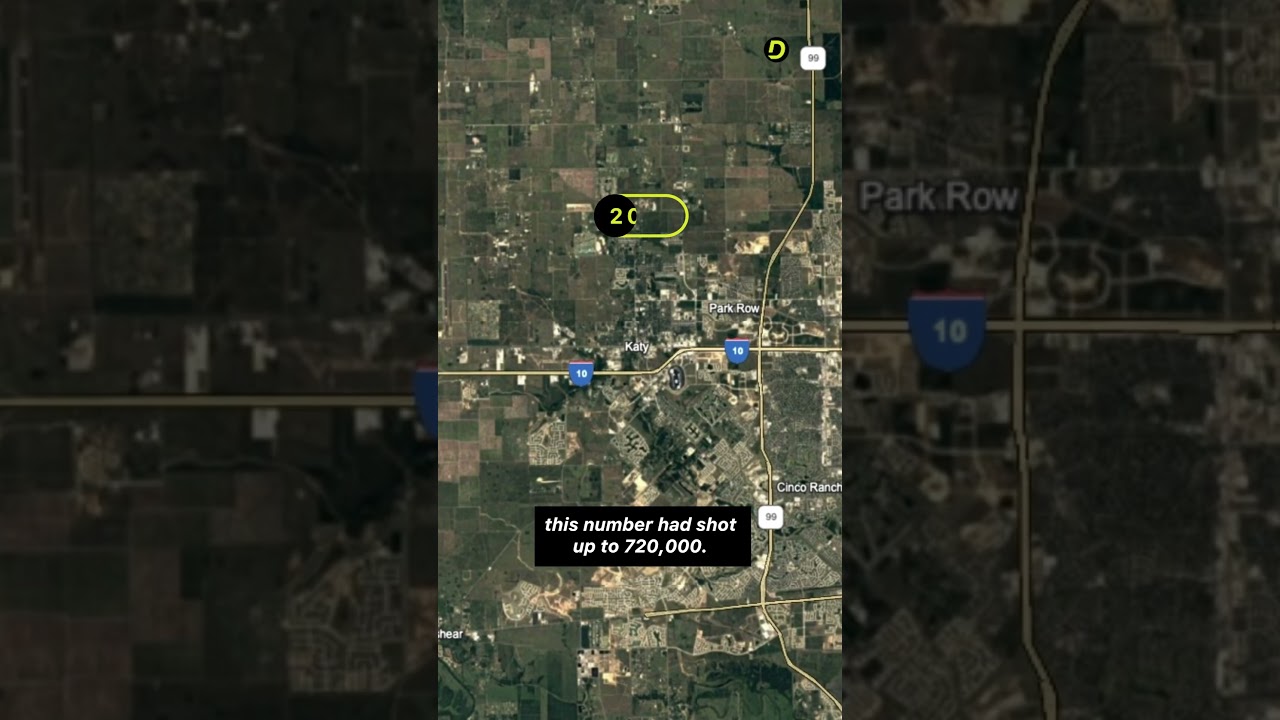
Katy Freeway - 26 lanes
Case Study

By Felicity Caldwell

February 4, 2025

Car parking will be banned for longer on several of Brisbane’s major roads under a plan to extend clearway hours and speed up traffic.

The Brisbane City Council project will first review the Musgrave Road and Waterworks Road corridor, between Red Hill and The Gap, which has clearways 7-9am inbound and 4-7pm outbound, Monday to Friday.

The corridor carries almost 130,000 vehicles during peak-hour each afternoon.

Lord Mayor Adrian Schrinner has announced a proposal to extend the hours of clearways on several Brisbane roads, starting with Waterworks Road.

Changes will be open to community consultation, but could include adding an extra hour or two to clearway times in the morning and afternoon, and adding clearways on Saturdays.

Other clearways will be reviewed in the future, including Bowen Bridge Road to Lutwyche Road, Abbotsford Road, Wynnum Road, Vulture Street, Wellington Road, Moggill Road, Webster Road, Wickham Terrace to Leichhardt Street, St Pauls Terrace, and Klumpp Road.

The council has also asked for suggestions of other roads that might benefit from clearways.

Lord Mayor Adrian Schrinner said there were limited options to widen Waterworks Road due to character homes, and road upgrades were expensive.

“Clearways are a critical tool that can cost-effectively keep traffic moving,” he said.

“If you have both lanes on each side blocked by parked cars, you’ve halved the capacity of the road. We know that it can also hold up buses and public transport as well.

“We’re thinking each corridor won’t cost more than a couple of hundred thousand dollars at the most.”

Better Streets for Ashgrove spokesman Stephen Hanley said extending clearways would ease congestion in transit lanes, benefiting motorists and bus commuters alike.

Stephen Hanley, from Better Streets for Ashgrove, says traffic calming and footpath improvements could improve safety in the area.

“The transit lane experiences much less congestion, and I empathise with commuters I saw stuck in long queues in the general traffic lane on the day that school holiday traffic conditions ended,” he said.

Hanley prefers to cycle to the city using side streets, and said safety could be improved by reducing speed limits and improving footpaths.

He said some footpaths on Waterworks Road were disconnected, and many curb ramps were dangerously steep, “resembling a BMX track”.

Clotilde Bélanger, from The Gap, often rides into the city, but avoids Waterworks Road except off-peak when traffic is light.

Clotilde Bélanger takes a lengthy detour around the city to avoid travelling on Waterworks Road.

“If you’re going to make it a clearway, I would think only allowing buses [in one lane] and having a better bus system would be better for more people,” she said.

Bélanger said she also supported footpath upgrades and improvements to bikeways.

“An opportunity to do a very straight bikeway along Waterworks Road would be amazing,” she said.

Brisbane Times asked the Lord Mayor if extending clearways might encourage more people to drive, worsening congestion, and whether council would consider bike or bus lanes.

Schrinner said it was always a consideration, but Waterworks Road had a fixed width, and it was “about sharing the space”.

“And so what we will make a judgment on is, what changes can we make to move the most number of people?” he said.

Last year, there were at least 9650 instances of motorists blocking clearways – which attracts a $483.90 fine – and more than 1660 vehicles towed from clearways.

1 Like

Gympie Road should be included. While not a clear-way, the bus lanes in place should be all day, not just for peak.

8 Likes

I haven’t gone through in really heavy peak traffic so I don’t know if they fill up or not (in the counterpeak direction). But off peak there’s only a handful of vehicles in there, usually turning soon anyway. I suspect that’s at least partly because it’s an added lane.

It’s more the few cars that park in the lane and cause issues.

2 Likes
2 Likes

Median speeds during the morning and afternoon weekday peaks were all slower than 25km/h on Logan Road, Moggill Road, Stanley Street inbound and Vulture Street outbound during December, according to Brisbane City Council data.

A Transport and Main Roads spokesman said the government was planning for the state’s future by building the roads and infrastructure to get Queenslanders home sooner and safer.