Melbourne West Gate Tunnel opens tomorrow. Cost 2x original estimate, going from $5.5b to $10.2b and with extended delays.
With these 2x cost blowouts, you could have built a whole second tunnel somewhere else in the city.
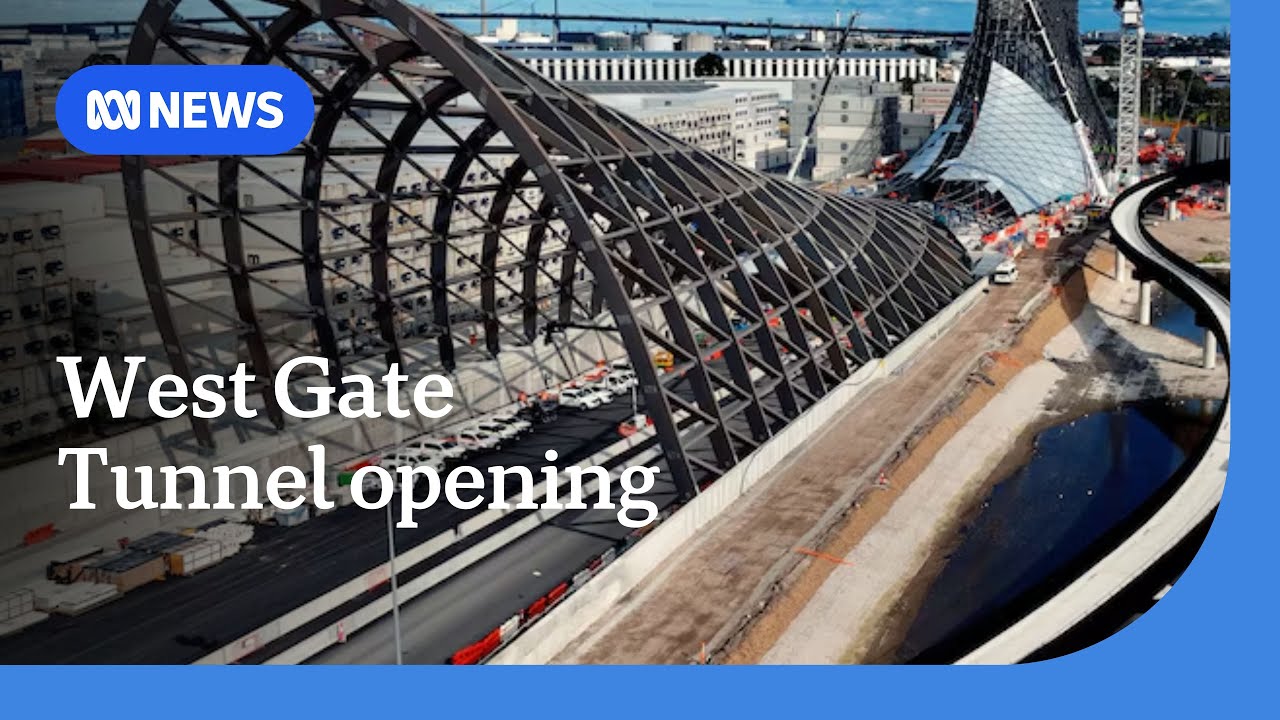
Melbourne West Gate Tunnel opens tomorrow. Cost 2x original estimate, going from $5.5b to $10.2b and with extended delays.
With these 2x cost blowouts, you could have built a whole second tunnel somewhere else in the city.
Not enough workers, cost likely up
Grim is right, quite diabolical. Due to the cost escalations I fear more rationalisation of planned projects, particularly not commenced. The ‘wave’ may become its own metaphor as we wave goodbye.
That will be a great thing. The conversion of stage 3 to BRT was ridiculous. Using the CAMCOS corridor to built BRT would have put a halt to heavy rail to Maroochydore for many many years, so if they leave it alone, I’m happy.
I don’t disagree, but why not build it along the Sunshine Coast mass transit project route from Birtinya to Maroochydore?
Is there a protected corridor for that? I thought it was meant to street run.
It absolutely should be, the Sunshine Coast needs some form of high-frequency spine akin to the GC tram and using the mass transit route means that when the train line needs to be extended they don’t have to rip their brand new mass transit route up.
I’m not sure why the state gov is so insistent in putting the wave in the rail corridor when it’s objectively a worse route for that type of use - if I had to guess, maybe they’re afraid of pushback due to disruptions/lane reductions in the road corridor? Could also be because they promised to build the line all the way to Maroochydore and they feel that deviating from the route would be breaking that promise, but surely the average punter doesn’t care about the specific route taken.
It’s street run but in dedicated lanes with signal priority AFAIK. Similar to most of GCLR (except the bit between Helensvale and Queen St).
Interesting to note is that there is no land allocated/protected, except for a small section in Caloundra. They might not have got up to that phase yet, but they do always have the streets to use.
Who wants to help work on a submission to the Qld Treasury
Closes end of next week
But isn’t the Story Bridge a major State Route (SR15) instead of a council road? Doesn’t that mean the State Government is the one in charge of the bridge instead of the council?
Story Bridge has been owned by the council since 1947.
Recent 7 News report on an estimated $15-30b siphoned from Victorian Government Big Build Projects.
Three key changes needed in Australia
Norway and the UK both acknowledged their systems were causing too many expensive publicly funded failures – and made changes.
Here’s where Australia could start.
1. Do things in the right order
Mandatory independent assurance, modelled on Norway’s system, should be a legal prerequisite before any announcement. Premature announcements cripple an evidence-based appraisal process.
Cost estimates should also be independently validated before ministerial approval.
2. Set up an independent project authority, with real power
Infrastructure Australia was created as an independent advisory body back in 2008 under Labor. It was championed by now Prime Minister Anthony Albanese as a way to “stamp out the pork barrelling”.
Yet even today, Infrastructure Australia has no real power to compel, reject or delay risky projects.
Australian needs a truly independent statutory authority with real power to oversee major projects.
This would require the major political parties to surrender something they prize: being able to announce projects before the proper appraisal has been done.
3. Make transparency the law, not the exception
Full public disclosure of cost and benefit estimates should be a legal requirement, before projects can get financial commitment.
Norway publishes its project appraisals in full as part of its mandatory reporting requirements.
The argument that Australia cannot do the same is not a practical objection. It is a political one
I do agree with setting up independent authorities to assess and give the go ahead to infrastructure projects and to take some of the decision making process out of the hands of politicians, but I think that we should be careful not to fall into the trap of thinking that public transport would benefit from an attempted ‘depoliticisation’ of infrastructure projects, the reason for the car oriented urban form of Australian cities is due to political processes and communal compacts that agreed that car oriented urbanism was how things should go and if these societal expectations aren’t changed in a process that will always involve politics the incentives to improve public transport over car oriented projects will not change and any supposedly independent authority will be restrained from actually trying to reorient the countries’ transportation system.
Just sharing some comments on the AI-summary of suggestions:
1. Australia is a Federation - unlike Norway or the UK which are central-government or unitary-state systems. The power to raise revenue (and through what means and how much) is distributed across three levels of government.
In Queensland particularly, it is part of the culture to only proceed with a major transport project when multiple levels of government are aligned and cost-sharing. Examples include:
There are some exceptions - Cross River Rail was built largely without Federal Funding, and Brisbane Metro was built using State Government owned busway infrastructure but the bill for that was borne by BCC.
2. Project Selection. Another cultural issue is project selection. Projects are often announced top-down with little or no consideration for alternatives. The project selection is also often not mode neutral, but decided from the outset.
For example, the Gold Coast faster rail project decided to duplicate the existing rail line. No proper analysis of an alternative route, for example, down the median of the M3/M1 corridor appears to have been considered.
Another example was the Gympie Road tunnel. It was simply announced as a road tunnel from the outset. A proper analysis would have considered all major modes side by side first. This project has strong political support from both major parties despite investors not supporting it (due to the extremely poor BCR of just 0.2 and the poor peak hour people throughput). The project now has to be retro-justified to fit into the overall transport strategy.
3. Independent Authorities. A permanent fixation by those recommending administrative changes to project delivery is the concept of an “Independent Public Authority” which would have public funding and authority, but no oversight from ministers or Parliament.
It is very rare for such authorities to exist - courts and integrity tribunals are some examples. The reason why such authorities tend not to exist is that these authorities need to be publicly accountable to Parliament and thus the people. Generally the Acts that create such authorities will include a ministerial reporting line or veto power over such an agency.
Infrastructure Australia and similar state-based bodies are advisory in nature. Ultimately it is up to voters through Parliament - and not an unelected authority - to decide what projects go through and what projects do not go through.
4. Transparency. Transparency is often suggested as a fix, but it is only a partial fix. Project costs are still going to escalate - just transparently - when there are other projects competing with for labour and materials on the east coast, when procurement favours certain suppliers over others (e.g. vehicles and suppliers are to come from within the state rather than outside of it), and when projects are chopped and changed due to a change of government.
6. Project Approach. Another key problem in Queensland is simply the approach to running projects generally. Cross River Rail is a good example - The project started out, then was cancelled by a new government who proposed a new project with a new name (the BaT Tunnel), which was then cancelled and renamed again to give the Cross River Rail project.
At each stage, the BCR of the project, a key indicator of public benefits to construction costs, dropped. The plans changed again when Dutton Park station was saved, which I believe resulted in a redrawing of the southern portal.
Every major project the Queensland Government completes should have a post-project review and financial/risk appraisal, which should be stored in a database somewhere that is publicly available. This would help cost and de-risk future projects.
Victoria Big Build - potential 30% cost increase