The transit transformation Australia needs
This paper explores different options for supplementary financing of new PT infrastructure and potentially services.
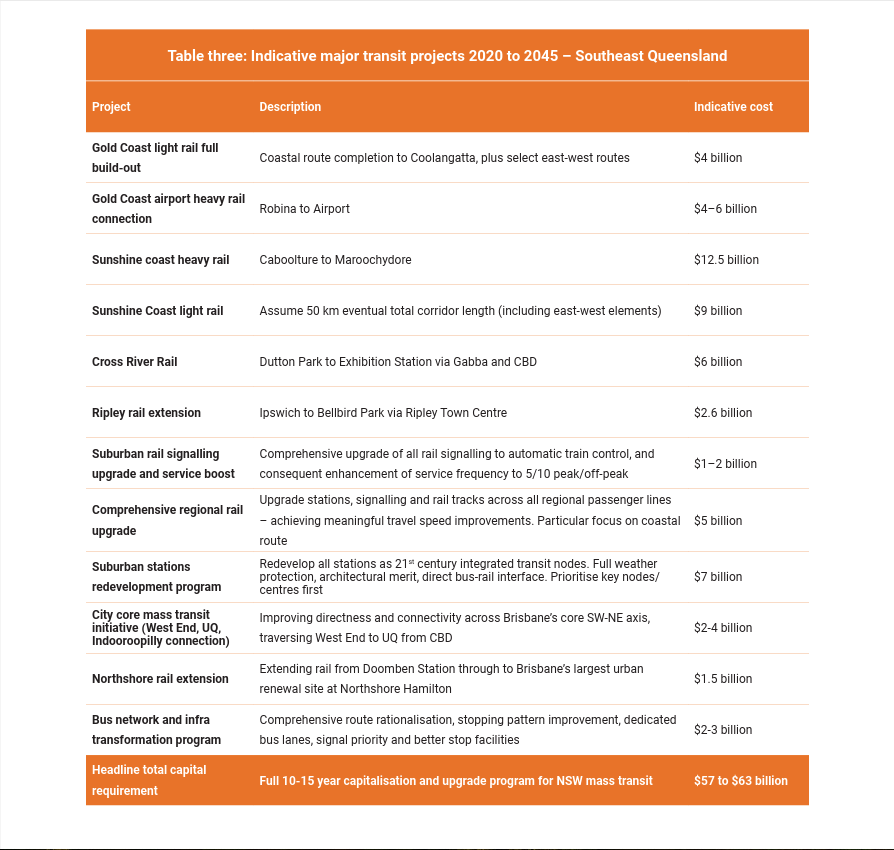
The infrastructure ‘wishlist’ is long and very expensive. The following table was published in 2019:
Hale sets out five ways to capture value from development around stations. This is significant, because a new PT authority could be empowered with planning powers for redeveloping areas around station precincts.
1. Mechanism A: Value capture through the existing, mainstream taxation system
Readers should note that by the ‘existing tax system’ we mean ‘with no change intended or required’. This should immediately differentiate TIF from other options and mechanisms that involve new or special levies and fees (see below) in the minds of funding policy stakeholders.
2. Mechanism B: Special fees or levies
Special fees or levies target a very specific and clearly delineated beneficiary or ‘customer’ base. In beneficiary funding and project delivery environments they are essentially a ‘fee for service’ utilised directly and solely for improving transport conditions. They should never be confused with taxes.
3. Mechanism C: Sale or auction of development rights
In practice, value realisation in a transit context usually means the sale of ‘air rights’ development opportunity above rail corridors or properties. Or it may involve the sale of some larger landholding around a new or upgraded station – on the presumption that the sale revenues go back into the infrastructure funding need, or that the incoming bidder is obliged to deliver station facilities and associated infrastructure according to appropriate specifications and standards.
4. Mechanism D: a comprehensive TOD and urban renewal agency (with value capture capabilities)
These include: precinct master planning; land rezoning; achieving value through design; public realm amenity and urban design; subdivision and property sale; as well as embedding a comprehensive and intelligent strategic vision in precinct plans, with clear leadership and accountability. All of these aspects impact on value creation. A planning ‘authority’ seems well-placed to marshal resources and carry out such complex tasks under a robust governance umbrella.
5. Mechanism E: Direct property – with rail agency as developer
A transit operator or agency proactively involved in developing and trading property holdings associated with stations and precinct or corridor-scale projects on a commercial basis, with the intent to use some of the profit from those activities for transit infrastructure and facility funding.
Notes
Authored by Chris Hale CEO & Founder – Hale Infra Strategy Pty Ltd. PO Box 440 Brunswick VIC 3056 PhD – Civil Engineering (transport strategy) Master of Property Economics Bachelor of Arts (Economics)