I find myself somewhat agreeing with some of the sentiments in that article. While Mt Gravatt Central has some decent bus connectivity, it’s hardly the kind of rapid transit that an area with the sort of density they’re proposing is suitable for.
My foamer idea is an underground along the Logan Road alignment, using the abandoned site of the old shopping centre on the northern side of Creek road as the staging site for the TBMs, to be turned into a major station with TOD on top. A man can dream….
I mean neither is Chermside, and the reality is we can’t afford to wait for mass transit to start rezoning these places if we are going to provide enough housing here.
Interim measures for buses every few minutes will be fine for the first few years anyway, because it’s close to the busway and it takes a while to get uplift delivered at a meaningful scale.
I agree with your metro idea, I also have that site as my tbm launching point on my fantasy plans.
If there’s any sense to it then it should mean bus lanes on Logan Road to support a high frequency routes connecting not only between Garden City and City/busway but also to GU Nathan and QEII, and to Carindale. That would open the residential up to more people (not just CBD workers and drivers), which has added benefit of spreading PT demand over multiple directions.
Most of the area around Eagle Junction is zoned with “Character” which is an appalling zoning type designed purely to protect home values.
All character zoning should be ended and switched to “low density” and all train stations should have either medium or high density zoning within 1km surrounding stations.
Further I’d say all greater Brisbane councils should harmonise their zoning types to match each other and simplify into far fewer zone types.
This author argues that at least two things need to be true for TOD development to proceed - I would suggest that a third requirement is also present. There must be services and the overall journey time (wait + in-vehicle trip) need to be competitive against whatever alternative competing mode is present (usually this is a car).
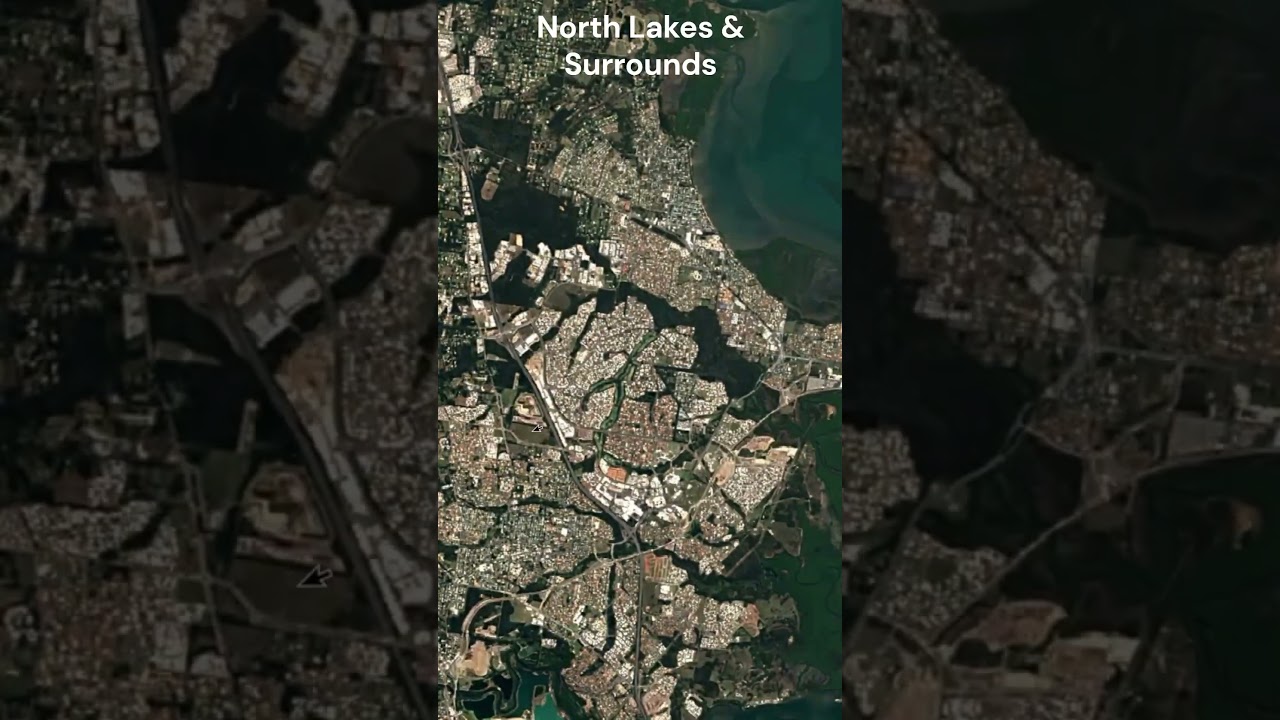
This video clip I have put together shows the full scale of urban sprawl of Greater Brisbane and the wider South East Queensland region since the 1980s. Specifically, it contains satellite imagery from 1984 to 2024. If you pay even closer attention though, you may also notice how despite all these new developments, much of our current infrastructure remains much the same, especially when it comes to public transport coverage in certain areas.
Keen to protect the “unique Queenslander” house style, the state government will not remove character zoning, despite calls to cut red tape and overhaul planning regulations.
Scrapping character zoning was among 64 recommendations in a major report released on Wednesday by the Queensland Productivity Commission.
…
The commission proposed introducing a set of state-managed flood and bushfire overlays, as well as removing blanket character zoning, which it said does little to preserve heritage and does not necessarily reflect community views.
Within the Brisbane City Council area, the report notes, most land within six kilometres of the CBD, and 69 per cent of residential land within one kilometre of the rail network, is effectively zoned low density.
“Either explicitly or because it has character overlays that make most development untenable,” the report says, adding to affordability issues by restricting supply where many people want to live.
My emphasis added - one of the really telling symptoms of the systemic failures in transport and urban planning.
I am still reading through the QPC Report and haven’t yet got to the Government Response, and only having read the Brisbane Times article, I am not sure that just scrapping the CRZ is the solution to housing density, and I fundamentally disagree with the broad removal of Council autonomy in how their local areas are planned.
What I would suggest needs to happen is that there needs to be more rigor on how the strategic land use plans are developed, consulted, and reviewed, with the aim of having this happen more frequently. I would also suggest that this process should allow for the Planning Minister to give directions to councils to drive policy changes if the councils themselves aren’t being responsive.
It’s been 20 years since BCC last had a real conversation with the community about this city’s overall growth pattern (CityShape 2026 in 2006). At that time, the community preference was for specific clusters of High Density in key locations, with smaller infill possibilities available generally near key routes. This project defined how the 2014 City Plan ultimately sets out its zones and is largely responsible for how (and where) the city has grown up over the last 20 years.
[As an aside, there were some minor revisions to this during 2012-2014 as part of the formal planning scheme development, but it didn’t have the same level of consultation on the CityShape as a strategic outcome as in 2006].
The most recent big picture consultation BCC had effectively banned townhouses in low density areas, instead of addressing design failures that impact on the community. Everything else since there has been precinct based projects, which whilst necessary, isn’t going to do enough to ensure that the overall picture is being realised (or, at the least, isn’t going to be transparent about how its doing it).
This is so stupid. Character zoning doesn’t even protect Queenslander style homes. They can be upgraded and renovated far away from that style in those zoning areas and those zoning areas also protect single family homes with no real architectural significance.
I totally agree with heritage protections but most homeowners in character zoned areas don’t want this because it would inhibit renovations that damage the heritage.
I honestly believe a great chunk of Brisbane’s current housing issues are attributable to character zoning which was used aggressively to reduce townhouse developments. Pre COVID townhouse developments were used very effectively in Brisbane to increase density while avoiding multi-storey development.
I don’t think my post, the article or the report suggest that a single change like scrapping the CRZ is a solution to housing density.
What’s likely is that its being used (and retained) as a politically convenient solution to respond to NIMBYism in inner city and fringe suburbs, pushing any development further out and away from transport. What genuine, good urban planning reasons are there for nearly 70% of land near a mass transport corridor to be low density within a capital city?
Why does local government autonomy need to be protected? What great transport and urban planning outcomes has that achieved?
Apologies, I didn’t intend to respond to you directly, I meant to just respond to the thread.
Whilst not a singular solution, the QPC report does explicitly call for the removal of all CRZ provisions from the planning system. This was also the title of and the subject of the first few sentences of the article. My opinion is that the complete removal of the provisions is not the correct answer, but rather BCC should be revisiting (/required to revisit) a) the use of the CRZ and b) the things that are permitted in these areas, as part of their broader strategic planning.
Local Government is closer to the people than the State Government is. I’m a firm believer that land use planning needs to engage with the community otherwise you end up with people being disconnected when development happens.
And to be clear, I don’t think this is an exercise in listening to what the community says they want and then just actioning that, because doing that doesn’t result in a public benefit. An active communication about why things are changing that takes the community on that change, and helps shape what those responses look like is important. This is something that is easier to achieve when you have better buy in with the community, and the reality is the local council will achieve better engagement than EDQ or DSDIP will.
For outcomes, I don’t think anything in this state is going exemplary to be honest. Both levels of government have failures that need to be rectified.
I think BCC is failing in providing enough med-high density development areas in proximity to transit, and generally are not doing enough to support low rise infill development opportunities across the city more broadly. They should be required to, as a priority, revisit the CityShape strategy, with the community, and that process should include the increasing of density in accessible locations (which is a requirement under the SEQ regional plan already).
The Queensland Government isn’t doing any better. They are the relevant agency for development in Flagstone and Yarrabilba, are responsible for the strategic land use and infrastructure planning in Ripley (with Council assessing), and lead the planning for Caboolture West/Waraba (with Council assessing). Two of these areas have no plan for accessible rail transport, and for the other two the rail transport is just not a priority.
I think the most important thing for all of this though, is the strategic planning functions need to be better integrated across council, utility providers and state entities. Which is part of the reason I think that the strategy part of planning schemes should be amended and consulted earlier than the development control parts.
There is some good mapping by the Qld Productivity Commission. It shows most train stations within the BCC LGA are zoned low density.
And more local consultation isn’t necessarily going to improve plan quality, because the quality of these plans are subjective and contested.
For example, we are all aware of what more consultation did with the GC Light Rail stage 4. The tram was rejected by locals even though it is highly valued and useful for everyone on the GC in general.
A similar phenomenon is happening with housing - locals generally don’t support more people or housing near them.
I mean I wouldn’t hold that as a shining example of consultation. An amended statutory consultation process would prevent the exclusionary practices that the LNP used from being applied here.
Like I said above, you wouldn’t structure these things as giving people a public veto. It’s about taking people on the journey for change.
One of the things I feel really strongly about for development, is that appeal rights should be decoupled from notification rights. Development has an impact on people, and people should be allowed to have a say. But at the same time, just because I think people should be heard and their concerns considered, I don’t necessarily agree that they should be able to go to court over it.
The Report has some interesting comments about the way that development is being held up through the courts and how councils are inconsistent in applying some rules. Quite a few of these things could be addressed with a couple of really sensible changes to the Planning Act that still keeps development closer to the community.
I guess the point being made here is that it isn’t the consultation tool or how the tool is being used or applied that is at fault. If you ask people their view, it very clearly, loudly and reliably is “not in my backyard please”.
We have seen this phenomenon ourselves during the 2013 bus review and to a smaller extent other bus reviews. Major change is confronting.
I agree. But my position is that locking people out of the process isn’t the answer. We have to be better at taking people on the ride to change at the policy / strategy stage, because we are constantly losing people at the delivery stage.
I read this article recently. Given how expensive house prices have become in recent years, even though many young people, myself included would fight to own a home, I think those days might be numbered. But we can’t keep renting at the mercy of landlords forever. So I think we should adopt the Vienna Model and build more social housing for everyone, particularly as transit oriented development. Could this solve Brisbanes Housing Crisis. Building more Government owned housing?. We used to do a lot of it back in the housing commission days.
Not entirely transit related but I think any transit oriented development would ideally be affordable social housing where possible, owned by either state or federal government or the Brisbane City Council.