A thread on TODs, TADs and value capture.
What exactly qualifies as a ‘TOD’?
This paper by Dr Chris Hale is behind a paywall. It proposes a performance-based standard for what a TOD is and is not. This is different to other definitions which focus on built form or presentation.
A performance based standard aligns much better with our own goals, as at the end of the day, we want patronage to increase as well as mode share.
Bolding added to the original.
Abstract
This paper discusses the distinction between transit-oriented development (TOD) and so-called ‘transit-adjacent development’ (TAD)—a label sometimes applied to less-successful TOD efforts. It is suggested that transport performance is the key factor distinguishing between the two outcomes—and that despite complexities, clearer quantitative benchmarks are needed. Much of the literature and discussion on TOD centres around a perceived failing of many TOD project attempts to deliver a ‘genuine transit-oriented outcome’. Often, this discussion has remained at a thematic level, or has rested on subjective qualitative appraisal, or critique of design or built-form outcomes. With a few exceptions, researchers and experts have generally been reluctant to provide a clear benchmark for TOD success or failure—perhaps because so many well-intentioned TOD efforts fall short of initial expectations.
This paper puts forward a proposal that mode share should be the apex metric for determining TOD project success or failure. It is suggested that a majority (50%+) of travel movements need to be accommodated by the sustainable modes (walking, cycling, and public transit) for a location to assume the label of ‘genuine TOD’.
Equally, other locations that attempt TOD, but do not deliver a sustainable travel majority, might be placed in the ‘TAD’ category. Benchmark figures from international precincts and locales are used to sustain this argument—with reference to the broader planning, urban development, and design contexts in which these ideas sit.
Notes
TOD Versus TAD: The Great Debate Resolved…(?)
Planning Practice & Research Volume 29, 2014 - Issue 5
Chris Hale
Pages 492-507 | Published online: 14 Dec 2012
https://www.tandfonline.com/doi/abs/10.1080/02697459.2012.749056
The transit transformation Australia needs
This paper explores different options for supplementary financing of new PT infrastructure and potentially services.
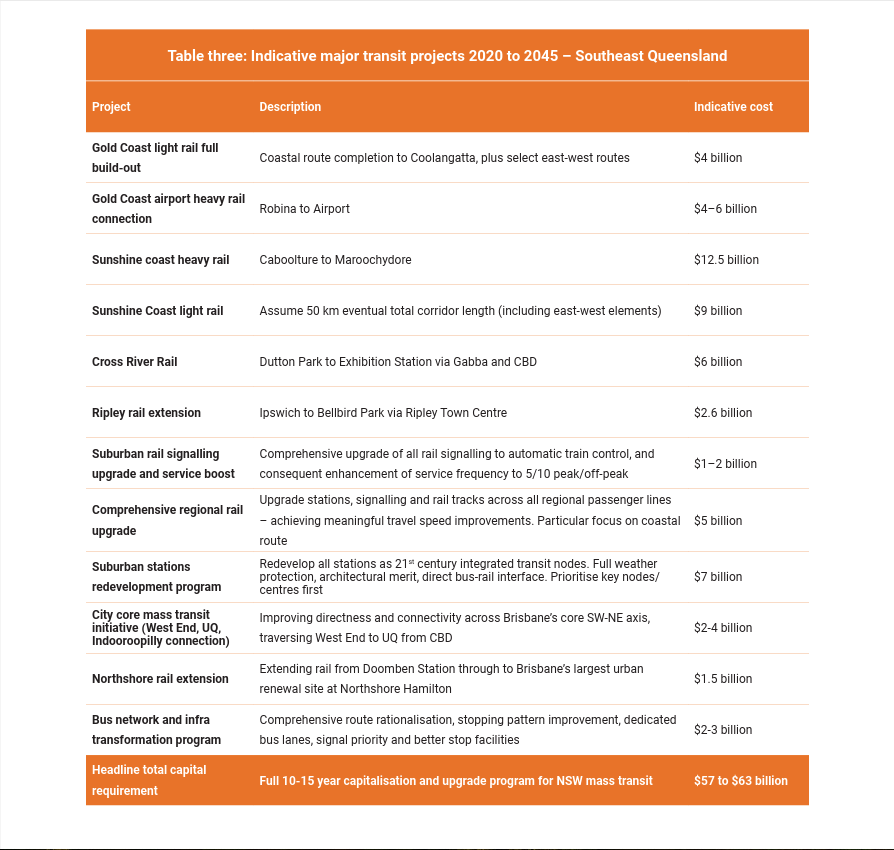
The infrastructure ‘wishlist’ is long and very expensive. The following table was published in 2019:
Hale sets out five ways to capture value from development around stations. This is significant, because a new PT authority could be empowered with planning powers for redeveloping areas around station precincts.
1. Mechanism A: Value capture through the existing, mainstream taxation system
Readers should note that by the ‘existing tax system’ we mean ‘with no change intended or required’. This should immediately differentiate TIF from other options and mechanisms that involve new or special levies and fees (see below) in the minds of funding policy stakeholders.
2. Mechanism B: Special fees or levies
Special fees or levies target a very specific and clearly delineated beneficiary or ‘customer’ base. In beneficiary funding and project delivery environments they are essentially a ‘fee for service’ utilised directly and solely for improving transport conditions. They should never be confused with taxes.
3. Mechanism C: Sale or auction of development rights
In practice, value realisation in a transit context usually means the sale of ‘air rights’ development opportunity above rail corridors or properties. Or it may involve the sale of some larger landholding around a new or upgraded station – on the presumption that the sale revenues go back into the infrastructure funding need, or that the incoming bidder is obliged to deliver station facilities and associated infrastructure according to appropriate specifications and standards.
4. Mechanism D: a comprehensive TOD and urban renewal agency (with value capture capabilities)
These include: precinct master planning; land rezoning; achieving value through design; public realm amenity and urban design; subdivision and property sale; as well as embedding a comprehensive and intelligent strategic vision in precinct plans, with clear leadership and accountability. All of these aspects impact on value creation. A planning ‘authority’ seems well-placed to marshal resources and carry out such complex tasks under a robust governance umbrella.
5. Mechanism E: Direct property – with rail agency as developer
A transit operator or agency proactively involved in developing and trading property holdings associated with stations and precinct or corridor-scale projects on a commercial basis, with the intent to use some of the profit from those activities for transit infrastructure and facility funding.
Notes
Authored by Chris Hale CEO & Founder – Hale Infra Strategy Pty Ltd. PO Box 440 Brunswick VIC 3056 PhD – Civil Engineering (transport strategy) Master of Property Economics Bachelor of Arts (Economics)
1 Like
1 Like
It’s a bit of a surprise as it seems to be a pretty large project for Irvine Group.
Probably their best known recent project has been the ongoing redevelopment of the Rivermakers precinct at Murrarie, which gives a good impression of the scale of projects that they work on.
1 Like
Fun fact - in the late 1990s when AirTrain was about to start construction, the consortium told the government that for a relatively small amount of money they would duplicate the track for an additional few hundred metres to future proof for a Toombul Shopping Centre station (e.g. extend the double track from the junction for a bit longer to establish a straight section where you could drop in a station later). The government had promised that taxpayer funding wouldn’t be used for the project and said no. I thought it was rather a shame.
It raises an interesting question about what the land value would have been with two adjacent stations rather than one.
Possibly unnecessary having two stations so close to each other but an interesting what if? 
5 Likes
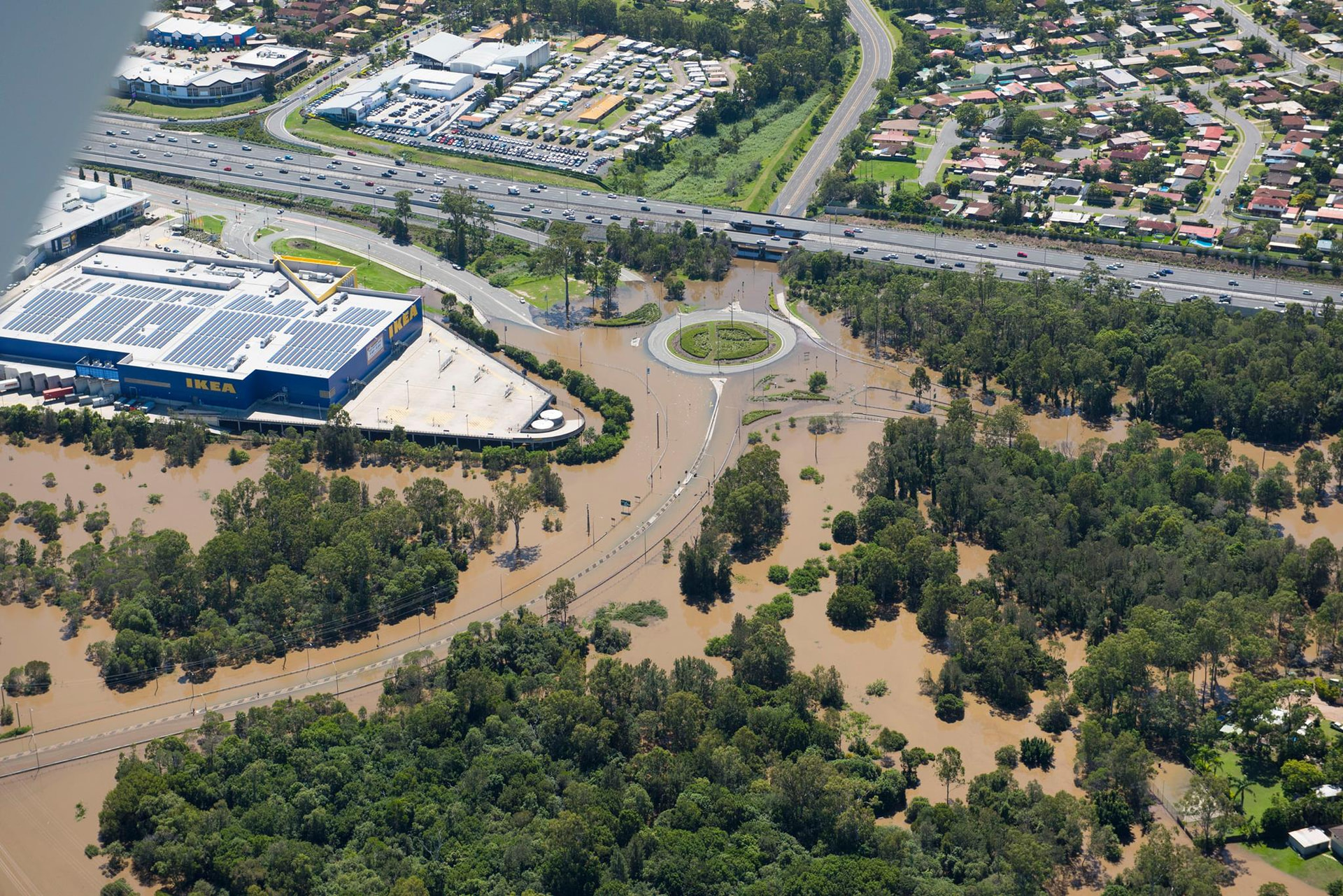
Interesting use of language and descriptors for Kedron Brook floodway.
2 Likes
I didn’t know about this! Thanks for the info
Any news on Uptown??.
Uptown was a revitalisation project for the previous shopping centre that occupied the site. Given it’s now essentially a greenfield site, and a new developer has taken ownership, I don’t think we’ll be seeing that branding return.
Yet another reason to hate privately funded transport projects. When governments are obsessed with not spending money for infrastructure, everybody loses (except perhaps the shareholders of the private consortia).
3 Likes
Are you getting Uptown (former Myer Centre) confused with Toombul?
While ISPT are selling out of the centre, I haven’t seen anything to indicate that Vicinity Centres (minority shareholder but management rights holder) are going anywhere.
2 Likes
Ah yes I’m getting it confused with the ‘Upstairs’ dining precinct that was added late in Toombuls life.
2 Likes
I know the site is proximate to a railway station and bus interchange, but the entire section south of Masefield St (and the imaginary line across if it continued through to Sandgate Rd) should just be turned into parkland. What’s the point of a TOD if it’s going to flood? A park would be compensatory for the loss of parkland in Victoria for the Olympic Stadium.
The point is to give the local community their ammenities back and eliminate all the traffic the loss of the toombul shopping centre caused to Chermside and other nearby hubs.
yeh i mean the myer centre. I am curious if there is any more news about it.
1 Like
Nothing as yet, as majority shareholder ISPT has put their shareholding up for sale.
1 Like
It’s entirely possible to construct a flood resilient TOD on the site. Yes, it will flood again to the same height, but that’s a known risk now and appropriate mitigations can be made.
3 Likes