A thread for Youtube PT videos

1 Like
There have been a few suggestions on this forum around urban Gondola and aerial cable car systems. I have not really given them much thought previously. They are not a bad idea to investigate more for tourist purposes. One application though could be Newstead - Teneriffe to Bulimba.
Apparently, they are very low cost due to high standardisation. They could be a candidate for replacing shorter cross-river ferry stops.


Coming to think about it, these systems could be cheaper or similar cost to bridges. You could add them as an an additional option or a mode to assess during mode choice assessment / business cases.
Below is a ChatGPT AI summary, which indicates that you can have intermediate stations (requires further investigation / verification).

As a concept, you could assess, alongside other options (concept for discussion only):
- Toowong Station - Botanic Gardens - Mt Coot-tha
- West End - St Lucia (instead of bridges)
- Teneriffe to Bulimba
- Bellbowrie to Riverhills
The frequency could likely be very high, less than 5 minutes or so.
Your thoughts?
I would love to see gondola lines in Brisbane serving Toowong to Mount Cootha, Ferny Grove to Mount Glorious and Nerang to Mount Tambourine.
From Toowong I was thinking from Dean St @ Anzac Park up to Mount Cootha via the Botanical Gardens. It’s service by a regular bus service as well and next to depot facilities where Gondolas can be stored overnight and serviced.
A pylon system from Bellbowrie to Darra via the edge of the industrial estate at Sinnamon Park could be good as well
1 Like
Have any members here traveled on one?
Yes, Cairns, Singapore, Hong Kong, Vancouver and Kathmandu
The Vancouver one is one of those large standing ones and goes up Grouse Mountain.
There is also a new one that opened up at Thredbo called the Merritts Gondola that runs all year, which would be pretty cool to check out as well.
2 Likes
What’s available in terms of capacity? 4 pax/gondola seems a bit low.
This one in Canada fits about 20 pax

Depending on the gondolas size. I always thought they can comfortably hold 6-8 but up to 10 with smaller kids. Most systems can comfortably convey 4000 pax per hour.
Remember gondola use was part of our tourism submission and it would be a great addition in Se Qld prior to the Olympic games
The low cost, rapid deployment and small footprint with medium capacity seem to be really attractive features.
It would fill a gap that other PT modes would struggle to fill, such as cross river transport.
1 Like
They have some specific advantages in accessibility over difficult terrain or substantial elevation change, but it’s difficult to see the lack of flexibility and extensibility compared to other modes as disqualifying for most things. Also, that 4000 pax/hour is actually not that big. It’s not too hard to make a regular bus service achieve that sort of level.
They have done some amazing things in some South American cities which are in steep valleys with extremely high suburbs, but I am skeptical of their use for a river crossing. A bridge or a tunnel seems like a much more useful thing.
1 Like
This is true, though in many locations there isn’t a crossing. Bulimba is an interesting case as adding a bridge at this location is difficult.
It would be interesting to compare the cost of a gondola with a tunnel. And the tunnel is then cheaper to operate and connects to the rest of the bus or rail network.
1 Like
We can compare both side-by-side in an assessment  . That’s the great thing about having a few mode options.
As a benchmark, the Kuranda Sky Rail in Cairns has a capacity of 6 pax per standard gondola.
2 Likes


^^More Active Transport related
 NEW PODCAST ALERT: Transit by Design with Nicolas Reid!
Hey everyone! We just dropped a must-listen People and Projects episode of The Streets and People podcast with Nicolas Reid, author of Transit by Design. Nicolas shares practical, no-nonsense advice on how to plan public transport that actually works for Queensland communities.
Why you’ll love this episode:
-
Buses > big projects: Learn why buses are the real game-changers for transport networks.
-
Safe streets = better transport: How footpaths, crossings, and bike access make a difference to ridership.
-
Avoid the hype: Why we need to focus on outcomes (like frequency and reliability) over flashy infrastructure.
 Give it a listen on Spotify
More details on our website: Nicolas Reid on Designing Better Public Transport
Let’s chat!
-
What’s one thing you’d improve about public transport in your area?
-
Have you seen any great (or not-so-great) examples of transport design in QLD?
Jump into the thread and share your thoughts! 
#better-transport #public-transport Queensland #transit-by-design #buses-work
2 Likes
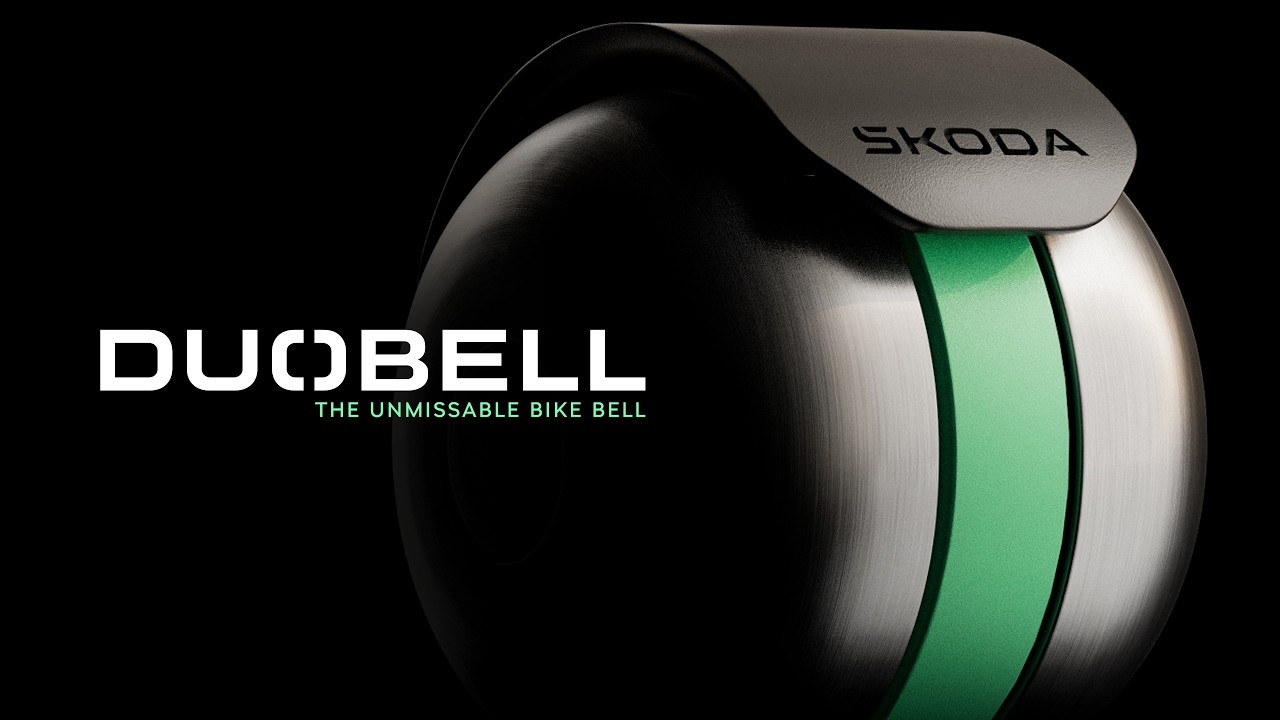
Hello. Crashes caused by not hearing the warning signs due to noise-canceling headphones are getting more and more common and recently a tram collided with a e-scooter driving delivery driver in London recently and the tram operator got sued for it (can be read further here : Tram operator sued over death of teenage e-scooter rider - BBC News ) Recently, Skoda has touted DuoBell, a special bicycle bell which when ringed emits a particular frequency at a irregular, rapid pattern unblockable by headphones. It was test drived with delivery drivers in London and the test was successful. The bell was heard a lot quicker than a regular bell and garnered quick reaction. I will link the video describing it below:
Could this technology be adapted to trams and other sorts of railway vehicles to prevent pedestrian collision? Could this be a standard equipment on trains of the future?